




WORLD - Conflict has been a persistent feature of the Middle East’s modern history. Across Lebanon, Syria, Palestine, Iraq, Libya, Yemen, and Sudan, periods of war have continued to re-emerge over time.
These conditions have also shaped questions of identity, displacement, political expression, and social inequality. In many cases, poetry became a medium through which these experiences could be translated into language, allowing individuals to express realities that were otherwise difficult to communicate.
This can be seen clearly in the work of some of the most influential poets of the region.
Identity and Exhile
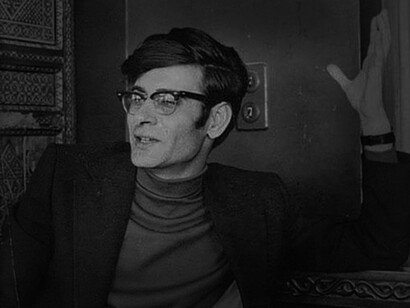
Mahmoud Darwish, for example, centers his writing on identity and exile.
Writing in the context of Palestinian displacement, Darwish reflects on what it means to belong to a place that is physically inaccessible yet remains central to personal and collective identity.
His poetry does not only describe exile as a geographic condition, but as an ongoing state that shapes memory, language, and self-perception.
In poems such as “Identity Card,” Darwish clearly affirms his identity despite the conditions around him, while in “A Lover from Palestine,” he presents the homeland as a central part of both personal and collective identity.
In this way, his work shows how poetry can preserve identity and give form to experiences that are otherwise difficult to express.
Politics, Gender, and Society
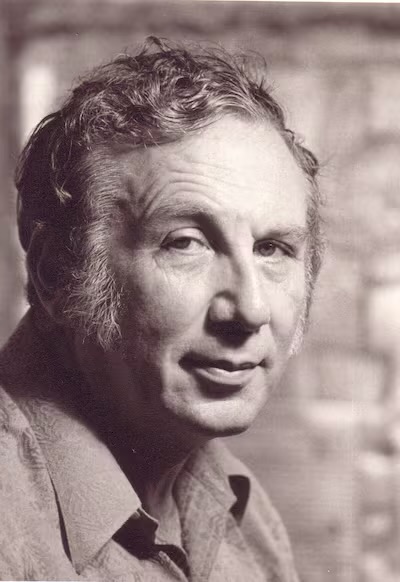
Nizar Qabbani approaches poetry as a way to engage directly with society, politics, and questions of gender.
Writing in a context shaped by political and social tension, his work reflects on the limitations placed on both public expression and personal freedom.
He is particularly known for challenging how women are viewed and treated, bringing these issues into public conversation through simple and direct language.
In poems such as “A Love Letter from a Woman,” he writes from a female perspective to challenge traditional expectations placed on women, while in “A Diary of an Indifferent Woman,” he highlights the emotional and social constraints that shape women’s lives.
Through this, Qabbani’s work shows how poetry can question social norms, bring attention to gender inequality, and open space for conversations that are often avoided.
Women's Voice and Resistance
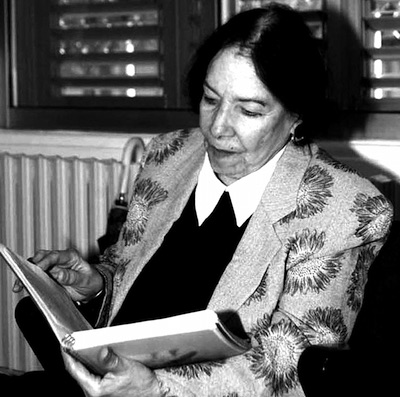
Fadwa Tuqan uses poetry to express both personal and collective experiences shaped by gender and conflict.
Writing as a Palestinian woman, her work reflects the challenges of navigating both social restrictions and political realities. Her poetry brings forward a perspective that is often overlooked, linking women’s experiences to broader national and social struggles.
In poems such as “The Night and the Horsemen,” she reflects on resistance and national identity, while in “Enough for Me”, she expresses a clear desire for personal freedom and self-determination. In other works, she continues to explore themes of confinement, identity, and the role of women in society.
Tuqan's work shows how poetry can give space to voices that are often marginalized, while connecting personal experience to wider social contexts.
Poetry with Purpose
Across these examples, poetry is used in different ways but with a common purpose. Darwish focuses on identity and displacement, Qabbani critiques social norms and political structures, and Tuqan highlights the position of women within both.
While the contexts differ, the function is similar. Their work is rooted in specific experiences, using language to describe, question, and make sense of them.
Poetry becomes a way to put these experiences into words and make them visible.