




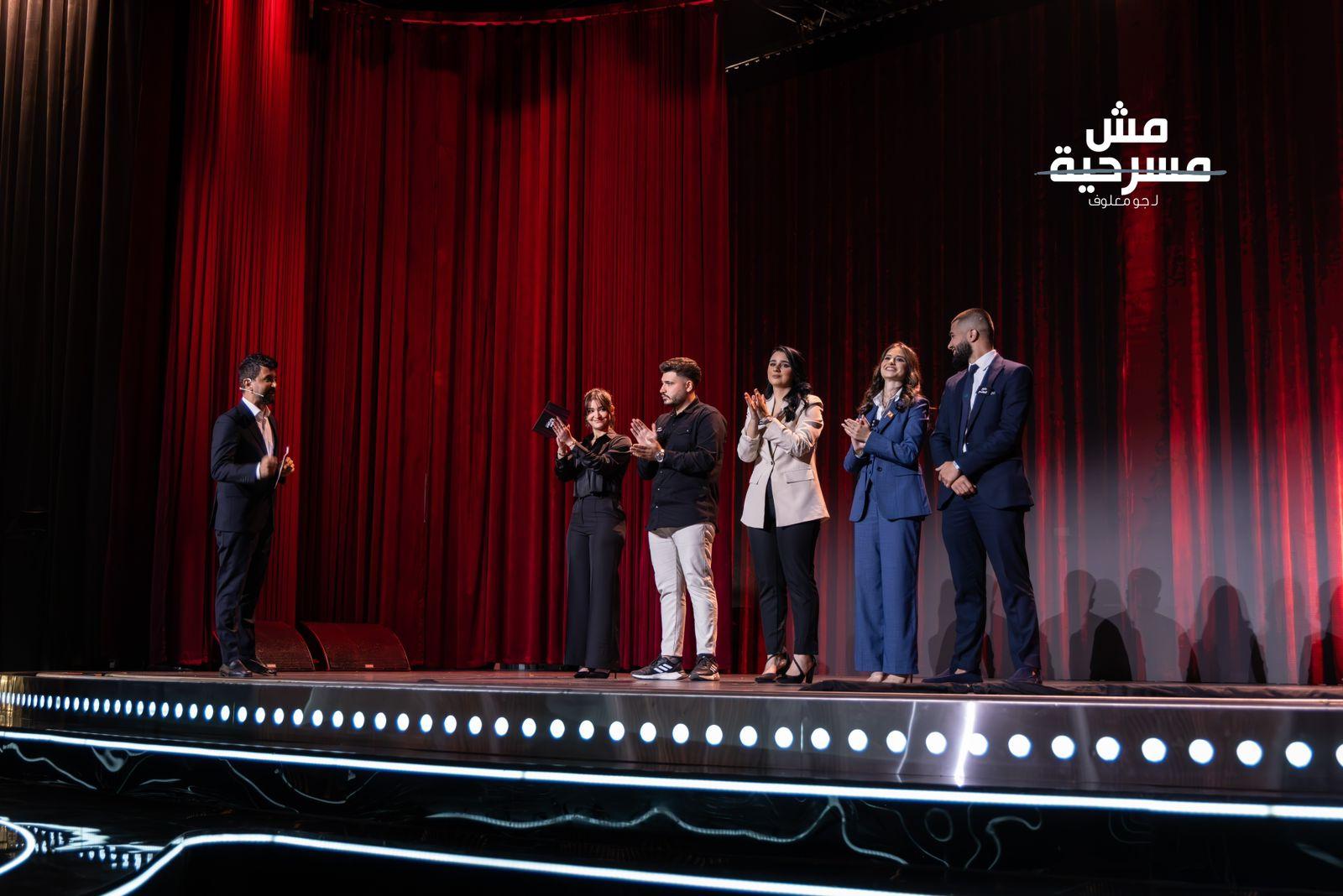
LEBANON – At a time when real spaces for dialogue in Lebanese media are shrinking, the program “Mesh Masrahiyeh” comes to break this pattern and offer a different experience based on boldness, spontaneity, and youth voices.
In this interview, Lebanese TV show host Joe Maalouf speaks in a special conversation with Enmaeya about the background of the program, its goals, and the challenges it faces.
From the very beginning, it becomes clear that “Mesh Masrahiye” is not just a traditional talk show, but a complete social experience.
Maalouf explains that the idea came after many years in media, when he, like many viewers, felt bored with repeated formats. Finding something new became a necessity, not a choice.
The program was created as a space that combines art and discussion, and gives young people the chance to express their opinions freely, even on topics considered “taboo” in Lebanese society.
A Name With a Double Message
The choice of the name “Mesh Masrahiye” was not random. It carries a double message: on one hand, it reflects artistic elements like theatre and performance, and on the other hand, it rejects acting or fake representation, confirming that what is shown is real life as it is.
Maalouf also notes that the name carries a critical message about the political reality in Lebanon, where “the whole country has become a theater,” as he says.
One of the most important elements of the program is spontaneity. There is no preparation for participants and no scripted lines, only one meeting before the episode and general topics. The goal is to keep the discussion honest and not artificial.
However, Maalouf points out that participants gradually improve and become more prepared over time, which reflects a collective learning experience within the program.
As for the topics discussed, he explains that the original plan focused mainly on social issues and human rights, but the situation in Lebanon pushed politics to take a bigger space in the early episodes. Still, he stresses that the program will move more toward social issues in the coming stages.
Tension As Part of Healing and Dialogue
The tensions that appear between participants are not seen as a problem. On the contrary, he considers them healthy and necessary. In his view, divisions cannot be addressed without confronting them. He compares this to psychotherapy sessions, where real change begins only when wounds are opened and spoken about honestly.
Regarding interaction, Maalouf notes that participants sometimes face harsh criticism and online bullying on social media, but what is surprising is their ability to handle it, and even their refusal to close comments.
This interaction, despite its negative aspects, is also used as research material to understand audience behavior and trends.
From Discussion to Real-life Initiatives
The program does not stop at discussion. It also extends to social initiatives. The goal, Maalouf says, is to turn disagreements on TV into cooperation on the ground, and to show young people who differ politically but come together for humanitarian work.
He also believes that art is a key tool for change and has always been part of intellectual revolutions around the world. That is why the program gives significant space to young talents, not only well-known names, to deliver human and national messages in different creative ways.
Message to Lebanese Youth
In closing, Maalouf addresses a clear message to Lebanese youth: do not be afraid to express your opinions, and do not stay away from politics. Change starts with participation, and the final goal is to reach a more aware generation capable of influencing elections and decision-making in the future.
“Mesh Masrahiye” is not just a TV show, but an attempt to break silence and reopen discussion in a country that has become used to burying its problems instead of facing them.
This experience may be shocking for some, but as Maalouf confirms, it is necessary to shed light on silenced issues and push society toward confronting reality instead of ignoring it.