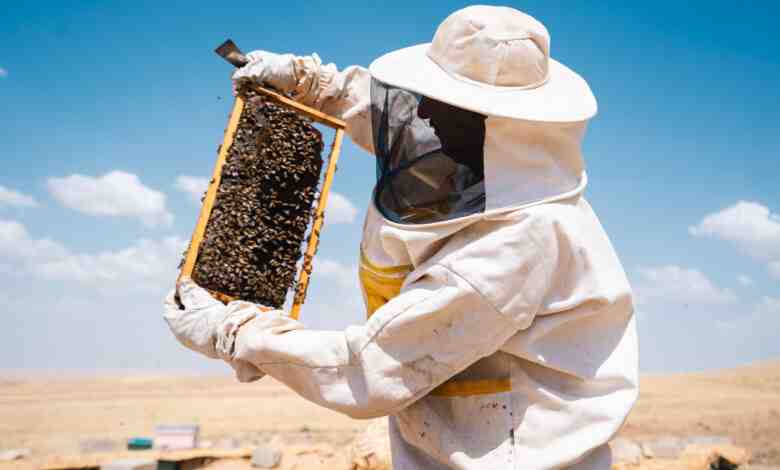








LEBANON - The Chamber of Commerce, Industry and Agriculture in Zahle and the Bekaa launched the PLANBEE project aimed at transforming the “bee economy” into a driver of economic resilience, job creation, and environmental sustainability across the Mediterranean.
The launch was held under the patronage and presence of Lebanon’s Minister of Agriculture, Nizar Hani, and brought together seven partner institutions from six Mediterranean countries, supported by European funding under the Interreg NEXT MED Program.
Speaking at the event, Minister Hani highlighted the strategic importance of the initiative, describing PLANBEE as a platform that connects scientific knowledge, environmental protection, and rural economic development.
He said the project offers a structured space for Mediterranean countries to exchange expertise and modernize the beekeeping sector in line with international standards.
Minister Hani stressed that the “bee economy” can no longer be viewed as a marginal agricultural activity limited to honey production. Instead, he said it is now a central component of food security, biodiversity protection, and the resilience of rural communities facing climate and economic pressures.
According to Minister Hani, bees play a critical role in pollination, directly supporting agricultural productivity and ecological balance. He noted that protecting bees effectively means protecting agriculture, ecosystems, and public health at the same time.
A key announcement during the launch was a new regulatory decision developed by Lebanon’s Higher Technical Committee for Honey Production.
Minister Hani described the measure as a foundational step toward modern governance of the sector, introducing clearer rules for registration of apiaries, distribution of hives, import conditions, quality control, and packaging standards.
The minister explained that the framework also introduces full product traceability, allowing consumers to identify the origin and quality of honey, while ensuring that Lebanese beekeepers receive fair value for their production.
He added that the Ministry of Agriculture will continue to refine these regulations in cooperation with PLANBEE partners, aiming to improve competitiveness in both regional and international markets.
The minister also linked bee protection to environmental policy, referring to ministry directives urging municipalities to reduce the use of herbicides and encouraging farmers to rely only on officially registered agricultural chemicals. He said such measures are essential to safeguarding pollinators and maintaining ecological stability.
The PLANBEE initiative is designed around four main pillars: training, excellence, networking, and cooperation. It targets small producers, rural entrepreneurs, and women and youth, with a focus on developing value-added products and expanding eco-tourism and rural livelihoods.