






LEBANON - In Lebanon, where therapy can feel financially out of reach and emotionally difficult to access, artificial intelligence is quietly filling a gap that has long existed.
Clinical psychologist and CBT psychotherapist Haya Saad tells Enmaeya that the shift is not happening in isolation, but in a country shaped by prolonged economic crisis, collective stress, and persistent stigma around psychological care.
Unlike in many Western systems where psychotherapy is partially supported through insurance or social security, mental health services in Lebanon remain largely privatized and expensive.
For many young people, this means that professional help is either delayed or deprioritized. Saad notes that this structural barrier has always existed, but has become more pronounced under recent pressures.
In this context, AI tools offer something particularly attractive: privacy without judgment, and answers without delay.
What's Driving the Reliance on AI?
Saad identifies two key factors behind the growing use of AI for mental health support among Lebanese youth: the need for immediate answers and the appeal of privacy.
“When a person is struggling, they try to understand quickly and take quick measures,” she said. “AI has made it fast to get answers, and it becomes very attractive, even if someone already has a therapy appointment.”
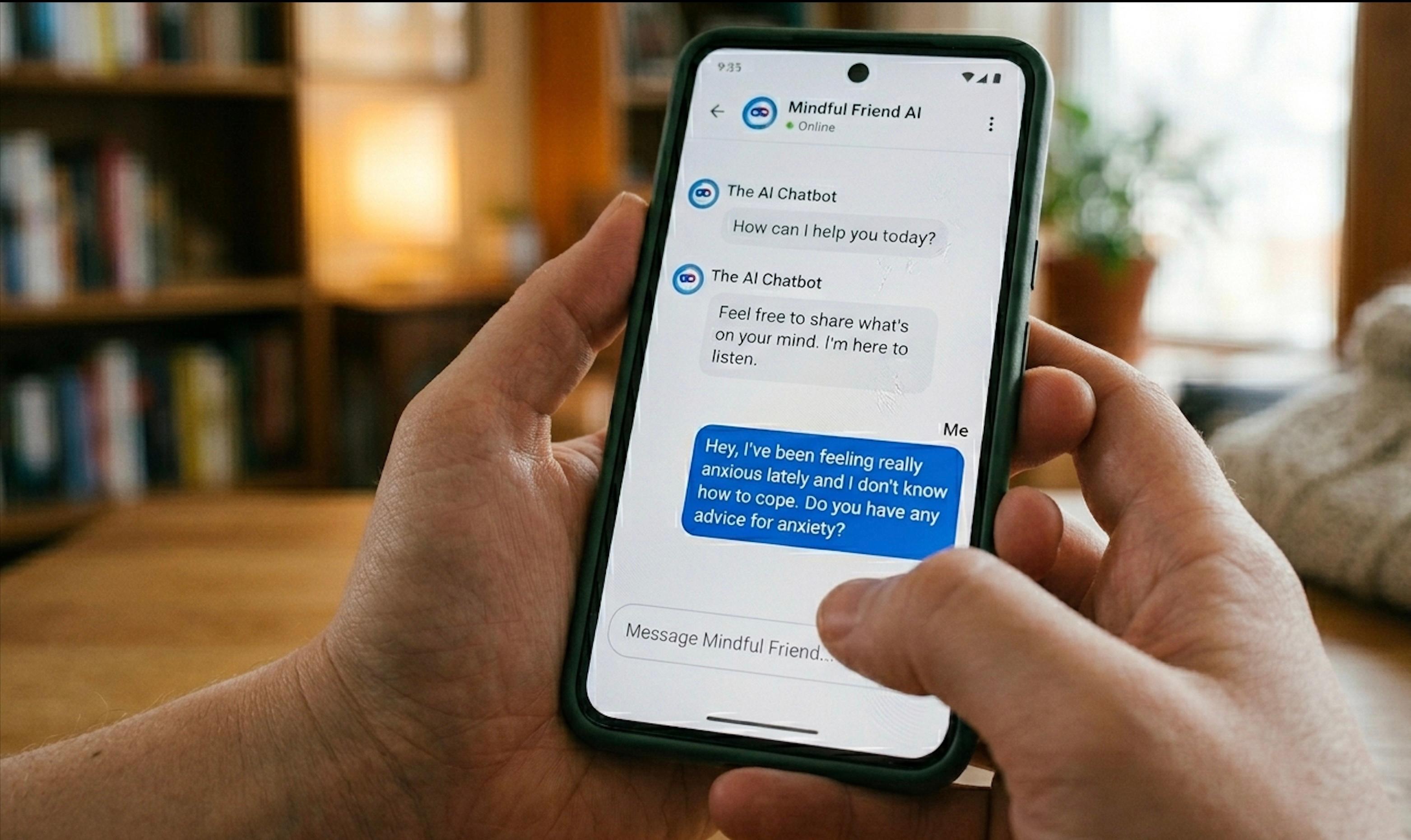
This immediacy is particularly significant for young people navigating anxiety, intrusive thoughts, or emotional distress. Instead of waiting for scheduled sessions or navigating social discomfort around discussing mental health, users can turn to AI instantly for explanations or reassurance.
Privacy is another major factor. In a context where stigma remains present, AI offers a judgment-free and anonymous space. For some users, this removes the fear of being misunderstood or labeled, allowing them to ask questions they might hesitate to raise with family, friends, or even professionals.
Are There Any Benefits?
Despite concerns, Saad emphasizes that AI tools can offer meaningful benefits when used responsibly, particularly in psychoeducation: a core component of psychotherapy.
“In therapy, we perform psychoeducation where we explain to the patient what they are going through, such as OCD,” she said. “Putting a label on things helps people understand that it’s not shameful and that it is treatable.”
In this sense, AI can function as an accessible educational tool, helping individuals contextualize symptoms and reduce self-stigma. For young people who may not yet have access to therapy, this early understanding can serve as a bridge toward professional care.
Saad also points to AI’s usefulness in supporting self-reflection and behavioral tracking. Tools can help users identify patterns in mood, habits, or coping mechanisms, such as avoidance behaviors, emotional triggers, or unhealthy routines.
Additionally, exposure to mental health information online may reduce stigma by normalizing psychological struggles and showing users that others experience similar difficulties.
She also points out that AI tools sometimes include general prompts encouraging users to reach out to professionals.
The Reassurance Loop
But alongside these benefits, Saad highlights a growing clinical concern: the “reassurance-seeking loop.”
“There are types of disorders, such as health anxiety, where a person gets worried over simple symptoms,” she explains. “With AI, the reassurance-seeking becomes continuous. It provides short-term relief only.”
This cycle, she warns, is particularly problematic because AI offers immediate validation without limits. While reassurance may temporarily reduce distress, it can reinforce anxiety over time by preventing individuals from tolerating uncertainty.
The issue is not entirely new: people with anxiety have long engaged in reassurance-seeking behaviors. But AI intensifies the pattern by making reassurance available 24/7.
Saad also raises concerns about the way AI communicates psychological information.
“AI can give misinformation because its advice and explanations are generic, and sometimes the language it uses is overconfident,” she says. “It makes it more believable.”
Beyond misinformation, Saad points to another emerging risk: emotional overattachment. Young users, particularly those who already feel misunderstood in their social environments, may begin to perceive AI as more validating than human interaction.
A Tool, Not a Replacement
Despite these concerns, Saad is not dismissing AI completely. Instead, she frames it as a tool that must be used with awareness and critical thinking.
“We need to be reasonable and accept that AI is a big part of our lives,” she says. “There might be benefits, but we must keep in mind that AI can make mistakes. It should be used as a tool only, and we must keep our critical thinking.”
In a country where therapy remains unevenly accessible and stigma still shapes decisions, AI has entered the mental health landscape not as a solution but as a reflection of existing gaps. It offers speed where systems are slow, anonymity where stigma persists, and answers where uncertainty is uncomfortable.