






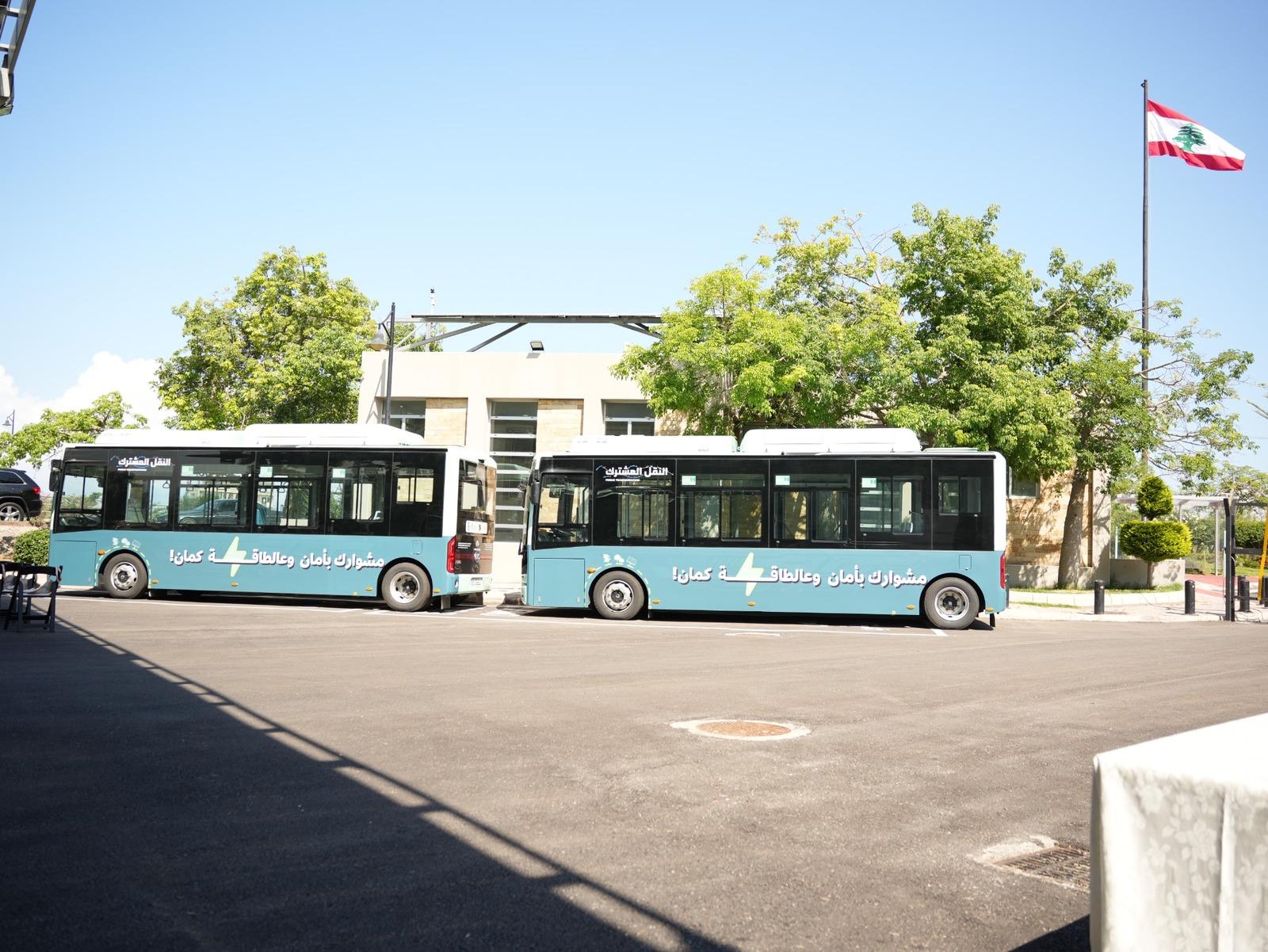
LEBANON - Lebanon has officially launched its first public intercity electric bus service connecting Jbeil and Beirut, marking a significant step toward sustainable public transportation amid rising fuel costs, economic challenges, and increasing pressure on mobility across the country.
The initiative, implemented by the United Nations Development Programme (United Nations Development Programme) with funding from the Global Environment Facility (Global Environment Facility), was inaugurated at Jbeil Bus Station in the presence of H.E. Minister of Public Works and Transport Fayez Rasamny, municipal officials, representatives of the Railway and Public Transport Authority, development partners, and members of the local community.
The project introduces four fully electric buses supported by solar-powered charging infrastructure at Jbeil Bus Station.
The service operates under the Railway and Public Transport Authority in partnership with ACTC and is expected to serve around 150,000 commuters annually. It aims to provide a cleaner, more affordable, and more reliable transport alternative while reducing traffic congestion, dependence on private vehicles, and cutting approximately 900 tons of CO₂ emissions per year.
The buses are fully wheelchair accessible, designed to improve inclusive mobility for persons with disabilities, women, youth, older persons, students, and workers who rely on public transport.
Speaking at the inauguration, Minister Fayez Rasamny described the launch as a “foundational step” toward rebuilding Lebanon’s public transport sector on modern and sustainable grounds, emphasizing that public transport is a “fundamental right and a pillar of any productive economy.”
He noted that the route connects Beirut and Byblos through seven stations, with buses equipped with monitoring systems linked to a central operations room. Fares have been set at LBP 200,000. He also announced plans for a new line linking Byblos to the Saint Charbel shrine in Annaya at a reduced fare of LBP 100,000.
Rasamny added that Lebanon’s public transport network currently includes 11 active routes serving more than 7,000 passengers daily, with additional lines expected to enter service soon through donated buses. He also highlighted ongoing plans to rehabilitate transport infrastructure and strengthen rail connectivity.
Municipal leaders stressed the importance of the project in supporting economic activity and improving urban mobility. The Mayor of Jbeil–Byblos emphasized cooperation with national and international partners to implement development projects that benefit residents and preserve the city’s role as a key urban center.
Former Mayor Wissam Zaarour reviewed the project’s development journey since 2018, noting that it endured multiple crises, including the economic collapse, the COVID-19 pandemic, and security challenges, while continuing toward completion. He highlighted its role in reducing transport costs, lowering pollution, and improving accessibility for students, workers, and persons with disabilities.
UNDP Regional Technical Advisor Amal Aldababseh described the initiative as a milestone for clean and affordable mobility in Lebanon, noting its potential to reduce emissions and improve access to safer transport options.
UNDP Resident Representative in Lebanon Blerta Aliko stressed that the project reflects practical, climate-smart solutions that improve daily life and restore confidence in public systems through strong partnerships between institutions, municipalities, and development partners.
The project also included the installation and rehabilitation of bus stops across Beirut, Jdeideh, Antelias, Jounieh, and Jbeil, with improvements to accessibility and passenger safety.
While modest in scale, the launch represents an important first step toward more sustainable and inclusive mobility in Lebanon, highlighting how clean transport investments can improve daily life and support a greener future.
