







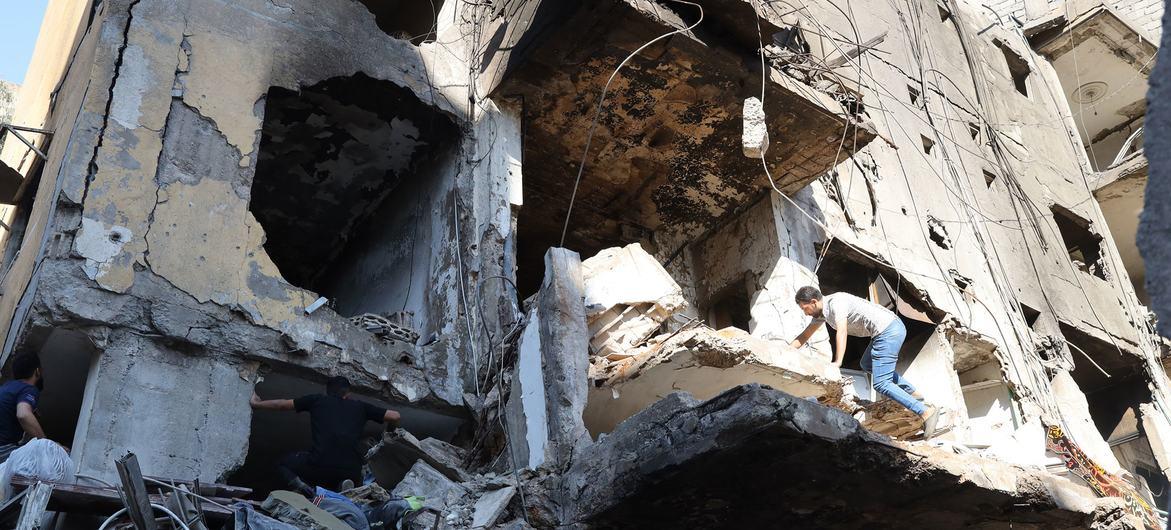
LEBANON — A new comparative report released by the National Council for Scientific Research (CNRS) Lebanon outlines the staggering scale of destruction to the country’s housing infrastructure during the 2026 conflict.
The data highlights a significant escalation in infrastructural damage, comparing an initial six-week period of active conflict with a subsequent single month characterized by widespread violations.
The Numbers at a Glance
According to CNRS data, the destruction spans multiple regions, with the southern governorates and the Beqaa Valley bearing the brunt of the impact.
• March 2 – April 16, 2026: A total of 50,424 housing units were reported either totally or partially damaged.
• April 17 – May 17, 2026 (“Month of Violations”): An additional 18,228 housing units were hit within a 30-day period, including:
o 8,086 housing units completely destroyed
o 10,142 housing units damaged
Regional Breakdown of Affected Units
The geographic distribution of damaged and destroyed housing units highlights a heavy concentration of destruction in Southern Lebanon and the suburbs of Beirut.
The highest toll was recorded in Nabatiyeh, with 9,972 affected units, closely followed by Sour (Tyre) with 9,909 units, and Bint Jbeil with 9,540 units.
The Baabda district also bore a significant burden, with 7,920 housing units impacted.
Further inland and south, Marjayoun reported 5,823 affected structures, Saida (Sidon) 2,205, while Jezzine and Baalbek each recorded 1,251 housing units hit. The West Bekaa region saw significant damage with 1,161 units affected, while the capital city of Beirut recorded 480 units.
Other districts experiencing notable damage included Hasbaya with 405 units and Aley with 324 units. Remaining areas saw lower but still significant impacts, including Zahle with 63 units, Hermel with 54, El Metn with 48, and the Chouf district with 18 affected housing units.
Escalation Despite Ceasefire Frameworks
The data shows that despite transitions between phases of the conflict, the “Month of Violations” alone accounted for a major surge in completely destroyed residential structures, further deepening the humanitarian and displacement crisis.
The high figures in Nabatiyeh, Sour, and Bint Jbeil underscore the severe toll on southern towns, while the 7,920 units affected in Baabda reflect intense bombardment of Beirut’s southern suburbs. Even historically quieter districts such as El Metn and Chouf recorded impacts, indicating that very few areas remained untouched by the scope of the 2026 war.


