




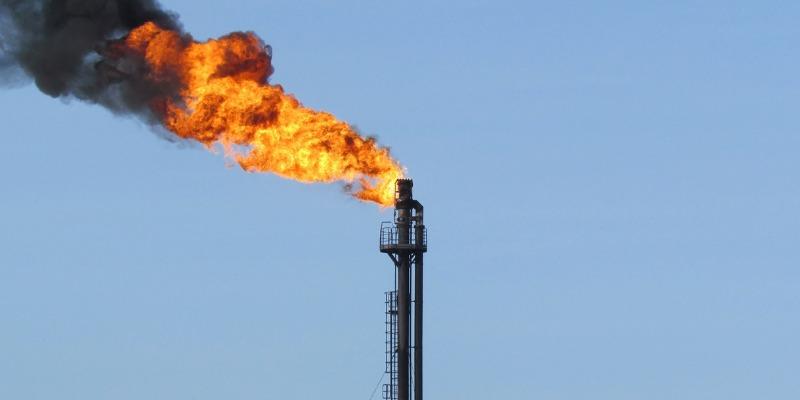
WORLD – Global gas flaring increased for the third consecutive year in 2025, reaching 167 billion cubic meters (bcm), the highest level recorded since 2019, according to the 2026 Global Gas Flaring Tracker report released by the World Bank’s Global Flaring and Methane Reduction (GFMR) Partnership in collaboration with the Payne Institute at the Colorado School of Mines.
The report describes the findings as a “missed opportunity of historic scale,” noting that the volume of gas flared globally could have significantly contributed to electricity generation, industrial use, and energy access in developing regions.
It also highlights that the gas wasted in 2025 carries an estimated economic value of US$54 billion, while eliminating routine flaring would require an estimated US$70–100 billion in upfront investment.
Despite the availability of proven technologies to capture and utilize associated gas, the report says progress remains limited due to structural barriers, including weak regulation, insufficient infrastructure, limited access to capital, and a lack of enforcement.
Gas Waste at Record Scale
According to the report, the 167 bcm of gas flared in 2025 is equivalent to Africa’s total annual gas consumption and exceeds the volume of liquefied natural gas (LNG) that transited the Persian Gulf during the same period.
The study emphasizes that reducing flaring could generate economic benefits, including increased government revenues, improved energy access, industrial growth, and job creation, particularly in energy-poor regions.
It also notes that in Sub-Saharan Africa, power outages are linked to a 14% reduction in employment, underscoring the broader economic cost of energy shortages.
Economic Cost of Inaction
The report estimates that the gas flared in 2025 represents a loss of US$54 billion annually.
By contrast, eliminating routine flaring globally would require an estimated US$70–100 billion in upfront investment, roughly double the annual value of wasted gas.
It stresses that the technologies required to capture and use associated gas already exist, and the main barriers are structural—limited infrastructure, weak regulation, lack of financing, and insufficient enforcement.
Uneven Progress Across Countries
Despite the global increase, some countries have made significant progress.
The United States recorded the largest absolute reduction in 2025, cutting flaring by 0.4 bcm (7%), driven in part by infrastructure expansion such as the Matterhorn Express pipeline in the Permian Basin.
Kazakhstan has reduced gas flaring by 87% since 2012 through sustained regulatory enforcement and investment in infrastructure.
The report highlights these cases as evidence that meaningful reductions are possible when political commitment and investment align.
Tracking Improvements in Measurement
The 2026 edition of the Global Gas Flaring Tracker introduces an enhanced methodology using data from three NOAA satellites and an improved flare location catalog developed with the Payne Institute.
These updates are designed to improve the accuracy and completeness of global flaring estimates.
The World Bank concludes that while technical solutions to reduce flaring are well established, progress depends on stronger governance, better infrastructure, and sustained investment to turn available resources into productive energy use.