




LEBANON - Observed every year on 12 July, the International Day of Combating Sand and Dust Storms is a reminder that dusty skies are more than a passing weather event.
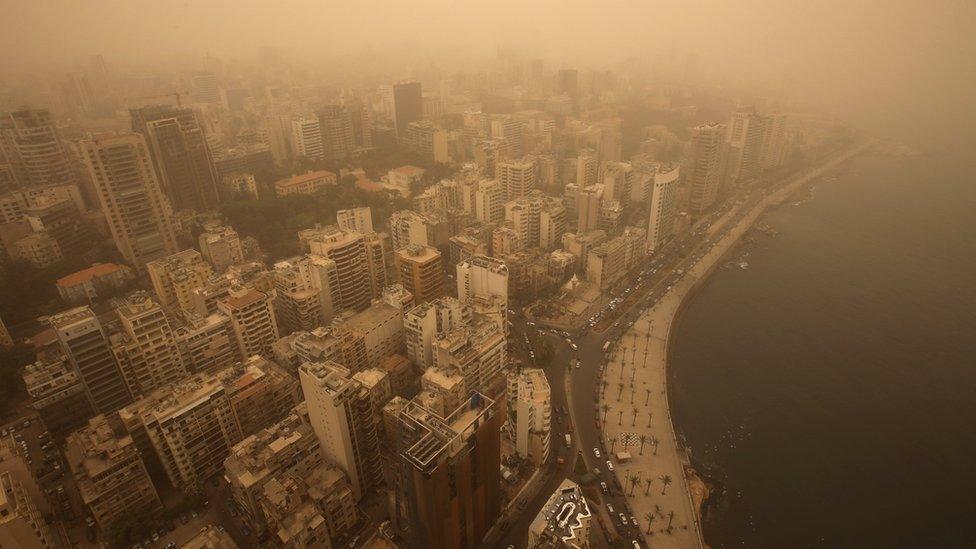
When a dust storm reaches Lebanon, the first signs are easy to see: the sky turns orange, the air becomes heavy, and a thin layer of grit settles over balconies, cars, and streets. It may pass within hours or days, but its effects can reach much further.
Sand and dust storms are not simply unusual weather. They are linked to public health, air quality, food production, energy, transport, and the ability of countries to prepare for environmental risks.
Dust Storms Worsen Lebanon’s Air Quality Crisis
According to the World Meteorological Organization, these storms affect around 330 million people in more than 150 countries, while nearly 2 billion tons of dust enter the atmosphere each year, much of it originating in North Africa and the Middle East.
Lebanon has already experienced what this can mean. During the major regional dust storm of September 2015, the Ministry of Public Health reported around 750 cases of breathing difficulties and two deaths.
Research on Beirut’s air quality also found that during dust episodes, coarse particle concentrations increased by 48.5%, while fine particles rose by 14.6%.
For a city already struggling with traffic emissions, diesel generators, construction dust, and weak air-quality monitoring, a regional dust event adds another layer of pressure.
The people most at risk are often those with the least protection: children, older people, outdoor workers, and people living with asthma or heart and lung conditions.
But the issue does not stop with health.
How Are Solar Panels Affected?
Dust can settle on crops, affect visibility and transport, and reduce the performance of solar panels. This matters in Lebanon, where many households and businesses increasingly depend on solar energy. It also matters for farmers already facing water shortages, rising costs, and changing weather patterns.
A 2025 study on extreme dust events in the Eastern Mediterranean identified Lebanon among the countries crossed by regional air-mass pathways linked to these events.
The study’s main data focused on Iraq, but its wider message is important for Lebanon: dust moves across borders. A storm affecting one country may be connected to atmospheric conditions and degraded land hundreds of kilometres away.
This makes sand and dust storms a development issue as much as an environmental one. They touch several Sustainable Development Goals, including health, clean energy, sustainable cities, climate action, land protection, and regional partnerships.
Why Long-term Public Data Matters
What remains missing is a clear national picture. Lebanon does not yet have enough long-term public data to confirm whether dust storms are becoming more frequent.
That uncertainty should not be mistaken for safety. It points instead to the need for better monitoring, earlier public warnings, clearer health guidance, and stronger regional cooperation.
On this International Day, Lebanon’s challenge is not only to react when the sky turns dusty, but to build the monitoring, public guidance, and regional cooperation needed before the next storm arrives.