







LEBANON - In June 2026, Lebanon introduced a strategy to restructure Lebanon’s insurance sector, with the stated objective of modernizing the industry and restoring confidence in it.
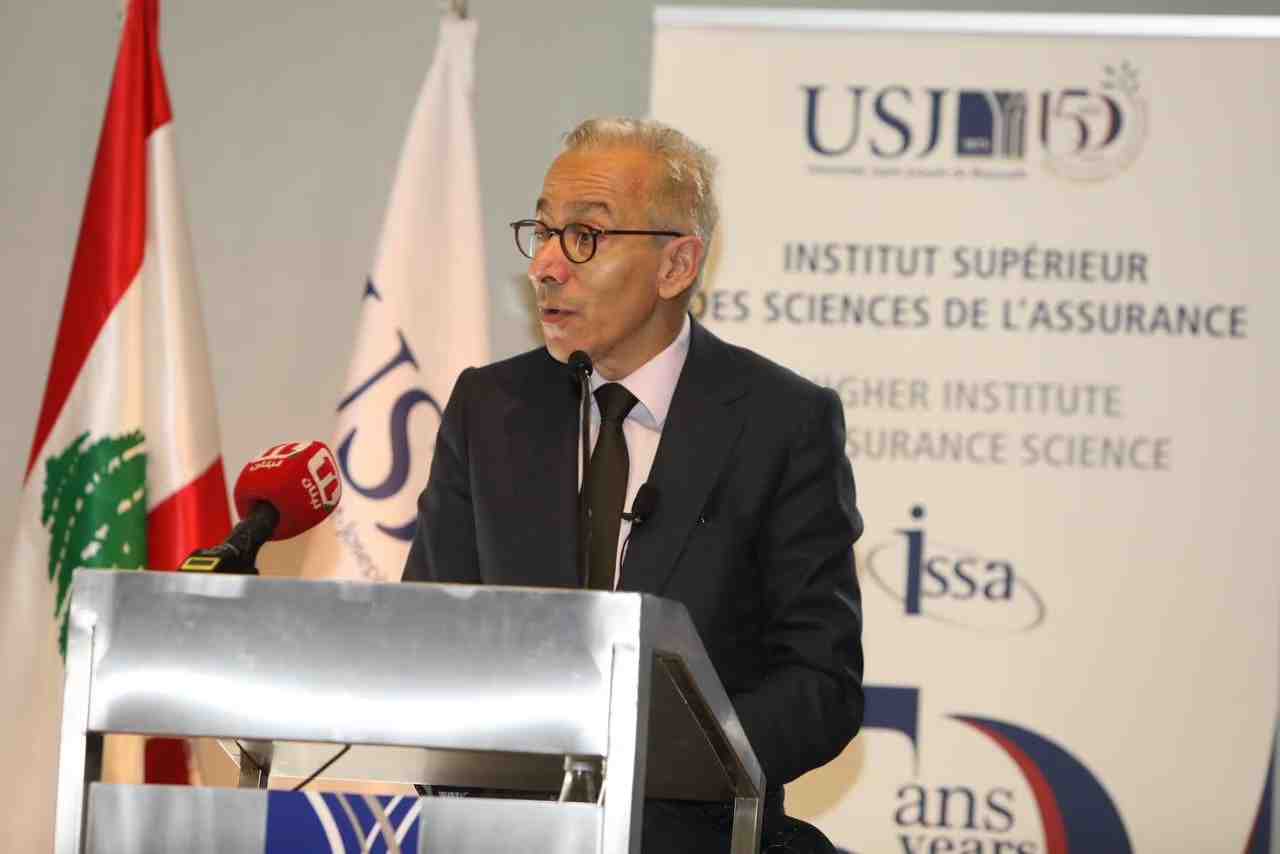
Presented by Economy Minister Amer Bisat at the Higher Institute of Insurance Science (ISSA) at Université Saint Joseph, the plan seeks to address longstanding structural weaknesses that were laid bare by Lebanon’s financial collapse.
Built around three pillars, market restructuring, stronger supervision, and healthcare cost management, the strategy is intended not only to stabilize the sector but to reshape it for the future.
At the heart of the reform lies a simple but critical challenge: trust.
“Confidence is the foundation of insurance,” Nadim Haddad, head of the Insurance Control Commission (ICC), told Enmaeya.
“People buy an insurance policy because they trust that, when an unexpected event happens, the company will honor its commitment. Once that trust begins to weaken, the entire market comes under pressure,” he added.
According to Haddad, Lebanon’s financial crisis resulted in a loss of confidence that had been building for years. He said the crisis revealed weaknesses in how the insurance sector was regulated and monitored.
Regulatory frameworks and supervisory tools refer to the laws, rules, and oversight systems that ensure insurance companies operate responsibly, remain financially stable, and protect customers.
“The market evolved significantly over the past decades, while parts of the regulatory framework and supervisory tools did not evolve at the same pace,” he said. “That gap became increasingly difficult to ignore.”
Global Standards for the Industry
Globally, the insurance industry operates within internationally recognized standards designed to strengthen regulation, improve transparency, and protect policyholders.
Among the most widely used references are the Insurance Core Principles (ICPs) developed by the International Association of Insurance Supervisors (IAIS), which guide areas such as regulatory oversight, corporate governance, risk management, financial solvency, and consumer protection.
These standards aim to ensure that insurance companies can manage risks effectively, meet their financial obligations, and maintain public confidence in the sector. For Lebanon, aligning regulatory practices with such international frameworks could help modernize supervision and support the sector’s long-term recovery.
Reshaping a Fragmented Market
The first pillar of the reform focuses on restructuring the market itself.
Market restructuring is not just about changing the number of companies in the market; it is also about changing the rules under which they operate. Stronger capital requirements are one of the main regulatory tools used to restructure the insurance sector.
For insurance companies, the ministry plans to introduce stronger capital requirements and risk-based capital rules, measures designed to ensure insurers hold financial resources that more accurately reflect their exposure to risk.
Risk-based capital (RBC) rules require insurance companies to hold capital levels based on the specific risks they face, such as investment, underwriting, and operational risks.
Unlike fixed capital requirements, this approach ensures that insurers with higher-risk activities maintain stronger financial buffers to protect policyholders and maintain market stability.
An external advisory firm has been appointed to support implementation, with the process expected to run through mid-2027.
For Haddad, stronger capital requirements should not be viewed as an additional burden on insurers but as a safeguard for policyholders.
“The purpose of stronger capital requirements is not to make business more difficult; it is to make promises more credible,” he said.
The reforms also target insurance brokers through stronger financial safeguards, clearer commission rules, a new professional code of conduct, and stricter protection of client funds.
A decision announced in January 2026 restored the required financial guarantee to $20,000, with a planned gradual increase to $50,000 over three years. The requirement applies immediately to newly licensed brokers, while existing brokers were given six months to comply with the initial level.
A More Proactive Approach to Regulation
Beyond market structure, the reform agenda represents a fundamental shift in how insurance regulation is carried out.
“The most important lesson from the crisis is that insurance supervision can no longer rely primarily on verifying compliance after the event,” Haddad said. “Modern regulation requires supervisors to identify vulnerabilities early, understand how risks are evolving, and intervene before those risks threaten policyholders.”
Under the reforms, supervision will become more continuous and analytical, with regulators placing greater emphasis on governance standards, internal controls, risk management practices, and financial resilience.
“If these reforms are implemented successfully, the market will notice a different kind of regulator,” Haddad said.
“Not necessarily one that intervenes more often, but one that intervenes earlier, bases its decisions on better evidence, and contributes to a more stable and predictable insurance environment.”
The Healthcare Challenge
The third pillar focuses on one of the industry’s most pressing concerns: rising healthcare costs.
Working alongside the Ministry of Public Health, the MoET plans to pursue reforms related to pricing of transparency, clinical oversight, and broader regulatory coordination within the healthcare system.
Healthcare inflation has become a major source of pressure for both insurers and policyholders, driving premium increases and raising concerns about long-term sustainability.
Health coverage represented approximately 50.4% of all insurance premiums in 2025, while health-related cases accounted for nearly 80% of the number of claims reported during the year.
This means that changes in hospital prices, pharmaceutical costs, medical implants, doctors’ fees, and claims-management practices can affect the financial stability of the entire insurance sector, as well as the affordability of coverage for households
Yet Haddad cautions that insurance regulators alone cannot solve the problem.
“Healthcare costs are one of the most pressing challenges facing not only Lebanon, but insurance markets around the world,” he said. “No insurance regulator can control healthcare inflation on its own.”
Instead, he argues that sustainable solutions require cooperation among insurers, healthcare providers, regulators, and public authorities.
The Insurance Control Commission’s role is to ensure insurers price products responsibly, maintain adequate reserves, and manage claims fairly, while supporting broader efforts to improve efficiency across the healthcare system.
Rebuilding Confidence
Ultimately, the success of the reform program will be judged by whether it restores trust in an industry whose credibility was deeply affected by years of economic turmoil.
For Haddad, the clearest measure of success will not be found in regulatory reports or policy papers.
“The first sign would be when policyholders no longer question whether their claims will be paid,” he said. “When people purchase an insurance policy because they genuinely trust the system, not because it is required by a bank, an employer, or the law, that is the strongest indication that confidence has returned.”
The ministry’s reform strategy is ambitious, spanning everything from capital adequacy and governance to healthcare financing and consumer protection.
Whether it succeeds will depend not only on new laws and regulations, but on the ability of institutions to enforce them consistently and credibly.
After years of crisis, Lebanon’s insurance sector is being offered an opportunity to reset. The challenge now is turning reform from a blueprint into a functioning reality.