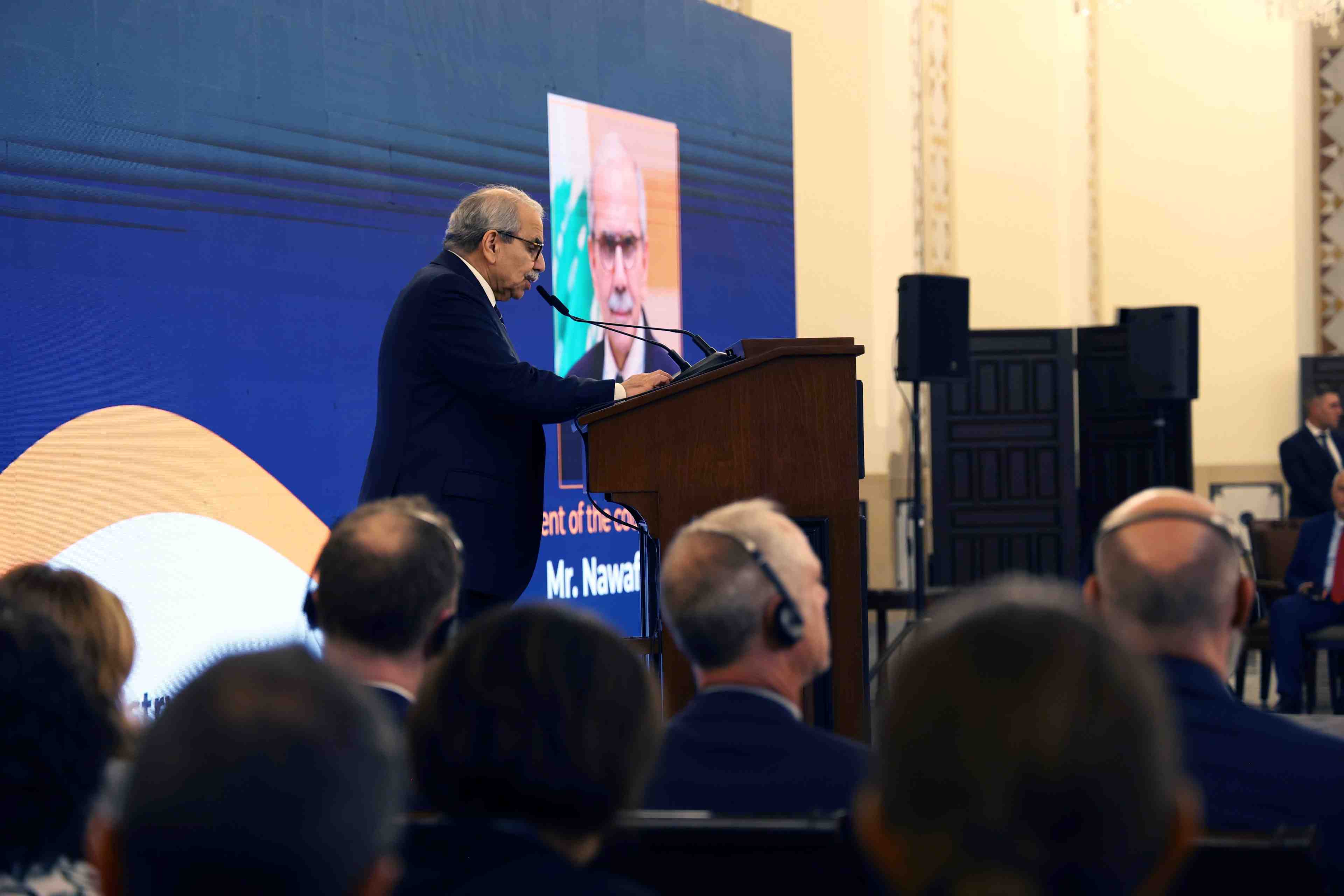







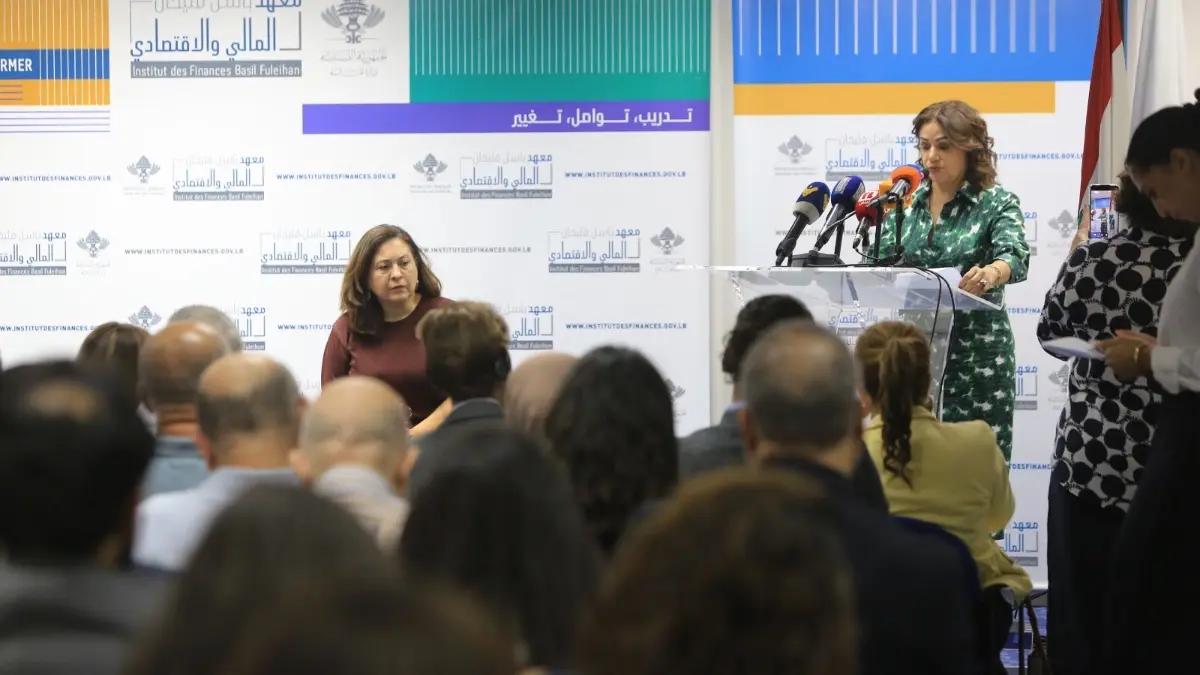
BEIRUT - The Ministry of Social Affairs, in partnership with the Basil Fuleihan Institute for Financial and Economic Studies and with support from the United Nations Children’s Fund (UNICEF), held a ceremony to launch the “Citizen Budget for the Ministry of Social Affairs” under the title “People’s Budget from the People’s Ministry.”
Held under the patronage and in the presence of Minister of Social Affairs Hanin El Sayed, the launch event aimed to strengthen financial transparency and improve public access to government information by helping citizens understand how public spending is allocated and how it affects their daily lives.
The initiative marks a new step in Lebanon’s efforts to make public finances more accessible and promote greater citizen participation in monitoring government spending.
A Budget Focused on Social Development
Speaking at the event, Minister El Sayed said the title “People’s Budget from the People’s Ministry” reflects the ministry’s core mission as an institution focused on people, particularly on protecting vulnerable groups, investing in their capabilities, and expanding their opportunities.
She explained that the ministry prepared its 2026 budget based on a broader vision to transform it from a Ministry of Social Affairs into a Ministry of Social Development, with the budget serving as a direct reflection of strategic priorities rather than simply a distribution of financial allocations.
“The budget is a translation of our priorities and vision,” she said, emphasizing that social protection requires an integrated approach combining assistance, services, and economic empowerment.
The minister said the Ministry of Social Affairs’ 2026 budget reached $181.7 million, representing an increase of nearly 40% compared with the previous year.
The funds are allocated across three main areas: $67 million for social assistance, $88 million for social services, and $23.7 million for economic inclusion and local development programs.
Minister El Sayed said the allocation reflects a comprehensive social protection approach that combines direct support for vulnerable groups with long-term efforts to enhance economic opportunities and local development.
She highlighted that 98.5% of the ministry’s budget is directly allocated to social programs and services, while administrative expenses account for only around 2% of total spending.
According to the minister, this distribution demonstrates the ministry’s commitment to directing public resources toward citizens and maximizing the social impact of government expenditure.
State Funding Expands for Aman Program
The minister also announced that the Lebanese state is contributing for the first time to financing the “Aman” social protection program through the national budget.
She described the move as a significant step toward shifting social protection from full reliance on external financing to a system where the Lebanese state assumes greater responsibility, while maintaining strategic partnerships with international donors.
The minister said the ministry plans to continue this approach in the 2027 budget, for which it has requested an increase in funding to $300 million, alongside additional national financing for the Aman program.
She stressed that investment in social protection should be viewed as an investment in Lebanon’s economic and social stability.
Citizen Budget as a Tool for Accountability
For her part, President of the Basil Fuleihan Institute for Financial and Economic Studies Lamia Moubayed Bissat stressed that budgets are not simply collections of figures and tables, but documents that reflect government priorities and values.
She said the Citizen Budget transforms the budget from a technical financial document into a democratic tool that strengthens participation, accountability, and trust between citizens and the state.
Moubayed noted that Lebanon was among the first Arab countries to adopt this approach in 2018 through the publication of a Citizen Budget for the general state budget.
She said this initiative contributed to improving Lebanon’s position in the Open Budget Survey, adding that the launch of the first Citizen Budget for a ministry represents a new milestone in advancing transparency and financial openness.
Moubayed highlighted that launching the Citizen Budget for the Ministry of Social Affairs carries particular importance given the ministry’s expanded responsibilities in responding to Lebanon’s humanitarian and social challenges.
She noted that the ministry has continued implementing structural reforms and developing financial planning tools despite ongoing crises.
“Crises should not delay reform; they make the need for reform more urgent,” she said, emphasizing that citizens should be able to understand public spending and participate in evaluating government performance.
A Model For Other Ministries
The event included the screening of an introductory film on the Citizen Budget for the Ministry of Social Affairs, followed by a detailed presentation explaining the distribution of the ministry’s budget, its main programs, priorities, and the impact of public spending on citizens’ lives.
At the conclusion of the event, the ministry and the institute said the initiative could serve as a model for other ministries and public administrations, reinforcing transparency and accountability.
They added that transforming budgets into accessible tools for public dialogue represents an important step in Lebanon’s broader financial and administrative reform efforts.