







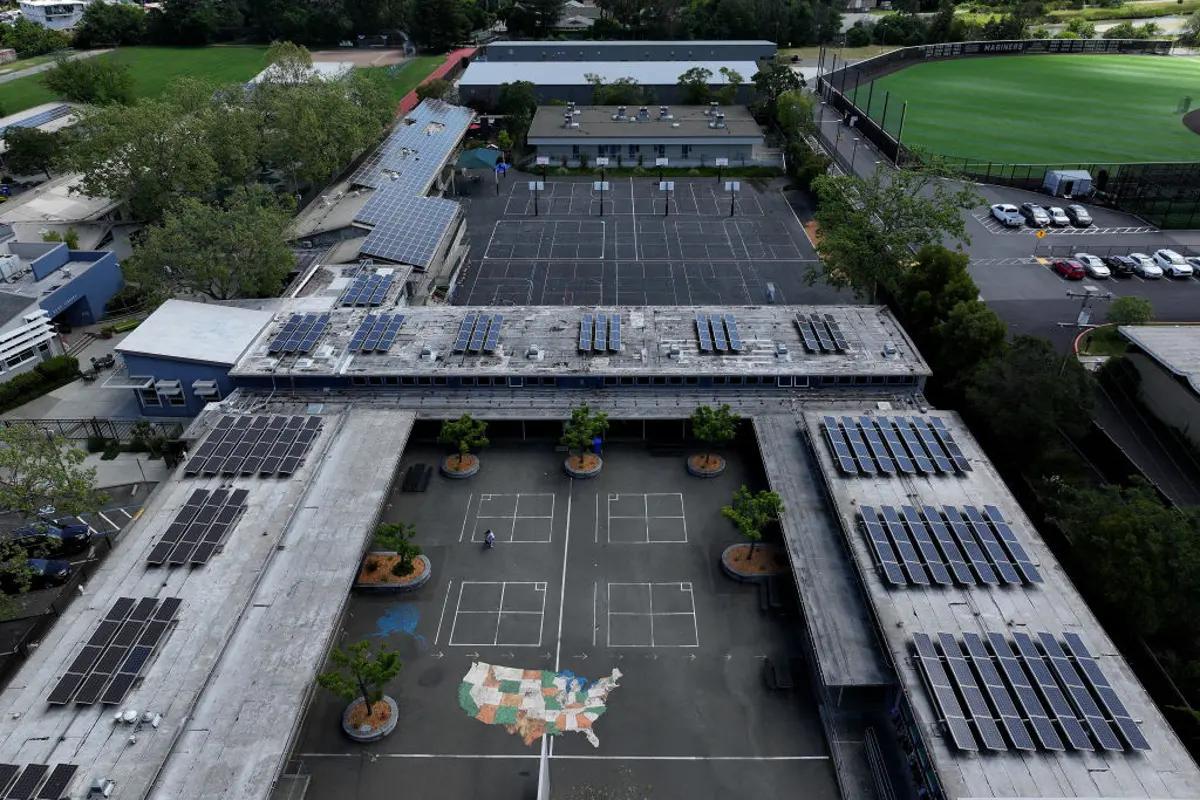
WORLD - Climate change is increasingly disrupting children's education and affecting their health, with extreme weather events creating new challenges for schools around the world.
The impact is particularly severe in low-income and rural communities, where schools often lack the infrastructure and resources needed to protect students from rising temperatures, water shortages, and unreliable access to electricity.
A recent analysis published by the World Economic Forum highlights how responsible businesses, investors, and philanthropic organizations can contribute to building more climate-resilient schools. By investing in practical solutions such as solar energy, clean water systems, cooling infrastructure, and improved sanitation, businesses can help ensure that climate change does not prevent children from accessing safe and effective education.
Climate Change Is Disrupting Education Worldwide
The climate crisis is no longer a distant threat that only manifests through melting glaciers, rising sea levels, or major natural disasters. Increasingly, its effects are being felt in everyday places, including classrooms.
According to UNICEF, at least 242 million students across 85 countries had their education disrupted by extreme climate events in 2024. This means that approximately one in seven students worldwide experienced interruptions to their schooling as a result of climate-related events.
Heatwaves were identified as the largest cause of these disruptions, with South Asia among the regions most severely affected. Schools may be forced to close during periods of extreme heat, while floods, storms, droughts, and other climate-related disasters can damage school infrastructure and prevent children from attending classes.
For millions of children, climate disruption is therefore not a future possibility. It is already affecting their ability to learn, attend school regularly, and maintain a safe and healthy educational environment.
Children Face Greater Risks From Extreme Heat
Children are particularly vulnerable to extreme heat because their bodies respond differently to high temperatures compared with adults. They heat up more quickly, sweat less efficiently, and take longer to cool down.
These risks become more serious in schools that lack basic cooling infrastructure. In classrooms without fans, adequate ventilation, shade, or reliable access to drinking water, high temperatures can quickly become a health concern.
The consequences can include:
Dehydration and heat-related illness
Increased fatigue and discomfort
Reduced concentration and learning ability
Lower classroom participation
Greater absenteeism
Disruptions to the school calendar
The effects of heat are not limited to the hottest days of the year. In many regions, temperatures are becoming consistently higher, meaning that children may spend hundreds of school days in classrooms that are warmer and less comfortable than they were in the past.
This creates a long-term challenge for education systems, particularly in countries where schools already face limited resources.
The Additional Impact on Adolescent Girls
Climate-related challenges can be even more difficult for adolescent girls, particularly when schools lack adequate water and sanitation facilities.
Without reliable access to clean water, functioning toilets, and appropriate hygiene facilities, managing menstruation while attending school can become extremely difficult. As a result, some girls may miss school regularly or stop attending altogether.
In communities already affected by poverty and climate-related disruption, prolonged interruptions to education can increase the risk of school dropout and, in some cases, early marriage.
This means that climate resilience in schools is also closely connected to gender equality and the right to education. Improving basic school infrastructure can therefore have benefits that extend far beyond climate adaptation.
Rural and Low-Income Schools Face the Greatest Challenges
The climate crisis does not affect all schools equally. Schools in remote, rural, and low-income communities often have fewer resources to respond to extreme weather.
In many rural and forested areas of low- and middle-income countries, access to electricity remains limited or unreliable. Some schools may only receive electricity for a few hours a day, while others may have no reliable connection to the electricity grid at all.
Extending conventional electricity infrastructure to remote communities can be expensive and technically challenging due to geographical distance and difficult terrain.
This creates a situation in which the communities most vulnerable to climate change often have the fewest resources available to adapt to it.
For these schools, decentralized renewable energy solutions such as solar power can offer a practical way to strengthen resilience while also addressing broader development needs.
Solar Power Can Do More Than Reduce Emissions
Solar energy is often discussed primarily as a climate mitigation solution because it can help reduce dependence on fossil fuels and lower greenhouse gas emissions.
However, in rural schools, the benefits of solar power can be much more immediate.
Reliable solar electricity can help schools operate essential systems, including:
Fans that help cool classrooms during periods of extreme heat
Water pumps that provide access to running water
Water purification systems that improve access to safe drinking water
Sanitation facilities that support students, particularly adolescent girls
Digital learning equipment and technology
Lighting that allows schools to operate more effectively
This means that a solar-powered school is not simply an energy project. It can become a health, education, and climate-resilience project at the same time.
By providing reliable electricity, solar systems can help create a safer and more comfortable environment for students while also reducing the school's environmental footprint.
From Climate Mitigation to Climate Adaptation
For years, corporate climate responsibility has largely focused on reducing greenhouse gas emissions and limiting future climate change.
While these efforts remain essential, the growing impacts of climate change mean that adaptation must also become a central part of climate action.
Some climate impacts are already unavoidable. Communities therefore need to prepare for higher temperatures, more frequent extreme weather events, and disruptions to essential services.
Schools are an important part of this adaptation effort because they are central to children's daily lives and to the resilience of communities.
Investing in climate-resilient schools can help ensure that children continue to receive an education even as climate conditions become more challenging. It can also protect children's health and reduce inequalities between students who have access to safe infrastructure and those who do not.
The Role of Responsible Businesses
Governments will continue to have the primary responsibility for education infrastructure and public services. However, businesses, investors, and philanthropic organizations can complement government efforts by supporting targeted initiatives with measurable results.
There is no single model for corporate involvement.
Businesses can contribute by:
Establishing corporate foundations
Funding renewable energy projects in schools
Supporting local non-profit organizations
Partnering with governments and municipalities
Financing water and sanitation infrastructure
Supporting climate adaptation programmes
Investing in community-led initiatives
Using corporate events to raise funds for social and environmental projects
The most effective approach is often to support organizations that already understand local needs and have established relationships with communities.
Rather than creating completely new programmes, businesses can help scale initiatives that have already demonstrated positive results.
A Case Study From Rural India
One example highlighted in the analysis comes from India, where the Asia Climate Tech Venture Fair supported the solar electrification of government schools through Samarpan, a grassroots organization that has worked in health and education across rural India for more than a decade.
Samarpan currently reaches more than 400 government schools and impacts approximately 1.5 million people.
The solar-powered schools supported through the programme demonstrate how climate investment can generate multiple benefits at the community level.
For students and teachers, access to solar electricity can mean cooler classrooms, safer drinking water, running water in toilets, and more consistent access to digital learning.
Each installation is also estimated to offset approximately 4–7 tonnes of carbon dioxide annually.
The initiative illustrates an important principle: climate investments do not have to focus exclusively on large-scale infrastructure or complex technologies. Sometimes, relatively simple interventions can produce significant improvements in people's daily lives.
The Asia Climate Tech Venture Fair Model
The Asia Climate Tech Venture Fair provides another example of how business communities can integrate social impact into their activities.
Organized by ADB Ventures, Emerald, Eurazeo, SGInnovate, and TRIREC, the non-profit event brings together climate-focused venture capital firms, corporate investors, and entrepreneurs from across Asia.
Its main objective is to strengthen the region's climate investment ecosystem by encouraging dialogue, sharing perspectives, and building relationships between investors and climate-focused businesses.
However, the organizers also chose to support a grassroots climate initiative alongside the conference.
This approach demonstrates how business events can create an impact beyond their immediate purpose. Instead of focusing solely on discussions, networking, and investment opportunities, such events can also direct resources toward projects that benefit communities directly.
The contribution to solar-powered schools represents only a small part of Samarpan's broader work, but it demonstrates how different organizations can contribute to the same challenge according to their own capabilities.
Why Partnerships Matter
The scale of the climate and education challenges facing children is too large for any single organization to solve.
Governments have a central role in developing national education and climate policies. Businesses can provide funding, technology, expertise, and investment. Non-profit organizations can bring local knowledge and community connections, while investors can help scale successful solutions.
Partnerships between these actors can therefore create more sustainable results.
The most effective climate-resilience programmes are likely to be those that combine public policy, private investment, local expertise, and community participation.
This is particularly important in developing countries, where public resources may be limited and where climate change is placing additional pressure on already stretched education systems.
Climate-Resilient Schools Are an Investment in the Future
The experience of solar-powered schools in rural India demonstrates that climate resilience does not need to be separated from social development.
A single investment in school infrastructure can potentially improve children's health, support continued education, promote gender equality, increase access to clean energy, improve water and sanitation, and reduce carbon emissions.
This makes climate-resilient schools an example of an investment with multiple returns.
For businesses, the lesson is that climate responsibility should not be defined only by what companies stop doing, reduce, or offset. It should also be measured by what they actively enable.
Supporting climate-resilient schools is one way for businesses to move from simply responding to the climate crisis to helping communities adapt to it.
The Bigger Picture
The climate crisis is fundamentally changing the conditions in which children live and learn. As extreme heat and other climate-related disruptions become more frequent, ensuring that schools can continue operating safely will become increasingly important.
Investing in climate-resilient education infrastructure is therefore not just about protecting buildings. It is about protecting children's health, dignity, learning opportunities, and long-term prospects.
The example of solar-powered schools shows that practical solutions already exist. What is needed is greater investment, stronger partnerships, and a willingness among responsible businesses to see climate action as both an environmental responsibility and a social one.
Ultimately, every school equipped to withstand climate pressures represents more than an infrastructure improvement. It is an investment in keeping children healthy, keeping them in school, and giving them the opportunity to build a more resilient future.