





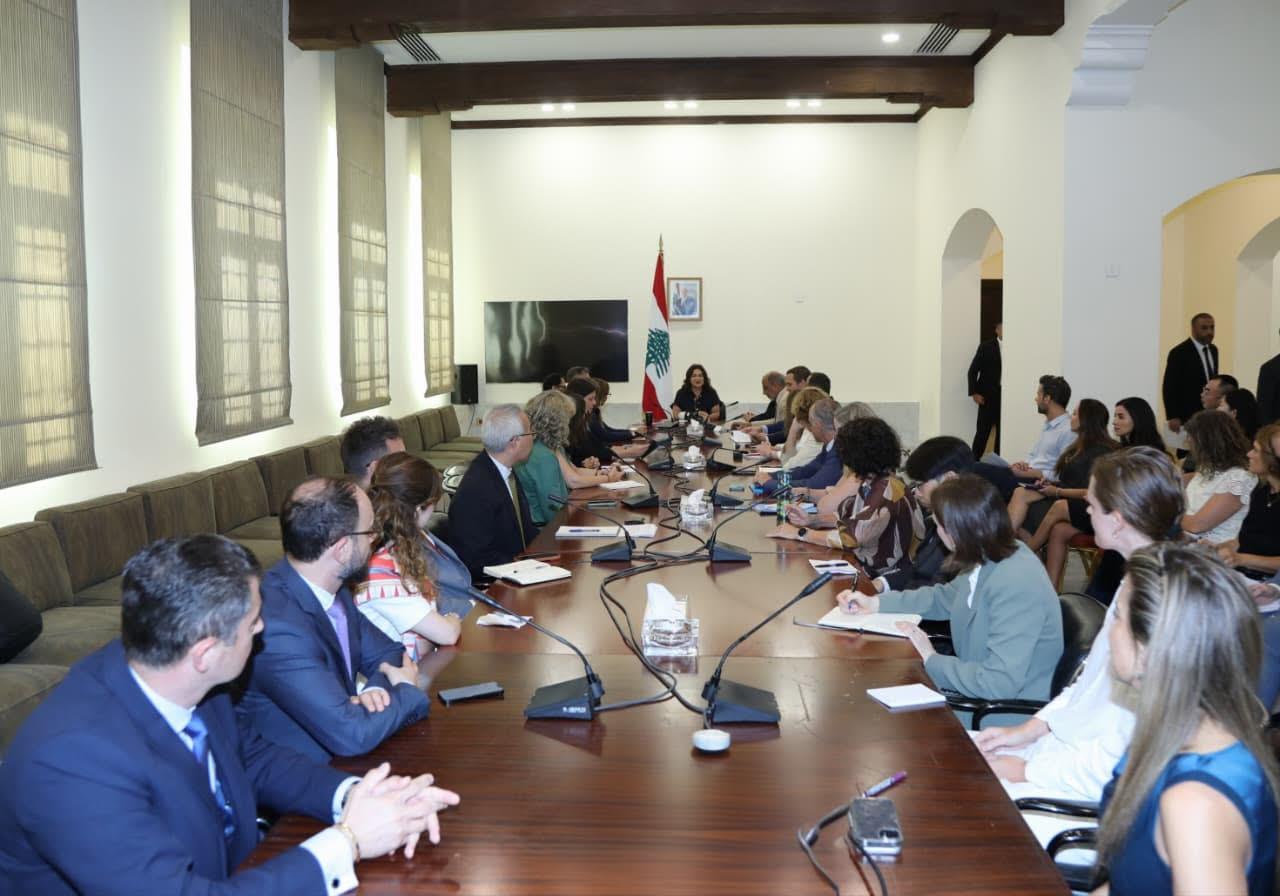
LEBANON – Under the chairmanship of Prime Minister Nawaf Salam, and in the presence of ambassadors, heads of cooperation missions, United Nations agencies, and development partners, a meeting was held at the Grand Serail to present and discuss Lebanon’s National Framework for Return, Early Recovery, and the Restoration of Essential Services, developed by the Lebanese government under the leadership of Minister of Social Affairs Haneen El Sayed.
During the meeting, El Sayed presented the key pillars of the national framework, which provides a unified government vision for the post-war phase. The framework links return, humanitarian response, social protection, early recovery, and the restoration of essential services, while also laying the groundwork for reconstruction based on clear priorities led by the Lebanese state.
The Minister of Social Affairs stressed that transitioning from emergency response to recovery cannot be achieved through fragmented initiatives, but requires government leadership, effective coordination among state institutions, and a close partnership with the international community to ensure unified efforts and maximize their impact.
She explained that the national framework primarily aims to enable people to return safely and with dignity to their communities, restore essential services, protect the most vulnerable groups, revive livelihoods, and lay the foundations for sustainable reconstruction led by the Lebanese state.
The meeting included discussions with international partners on the priorities for the next phase and mechanisms to support the implementation of the national framework, ensuring a coordinated and effective response to the needs of affected areas.
At the conclusion of the meeting, El Sayed thanked all international partners for their continued commitment to supporting Lebanon, affirming that the government looks forward to continuing joint efforts to translate the national framework into tangible programs and projects that contribute to recovery and reconstruction and strengthen the resilience of affected communities.