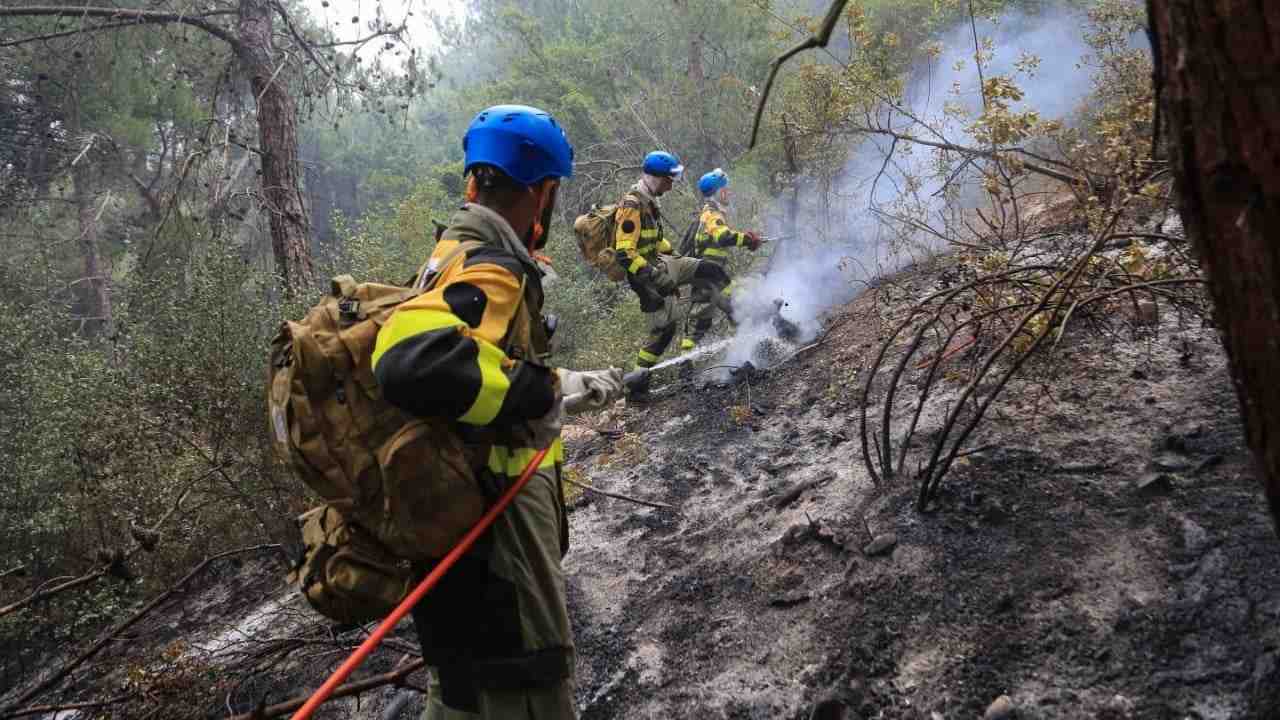





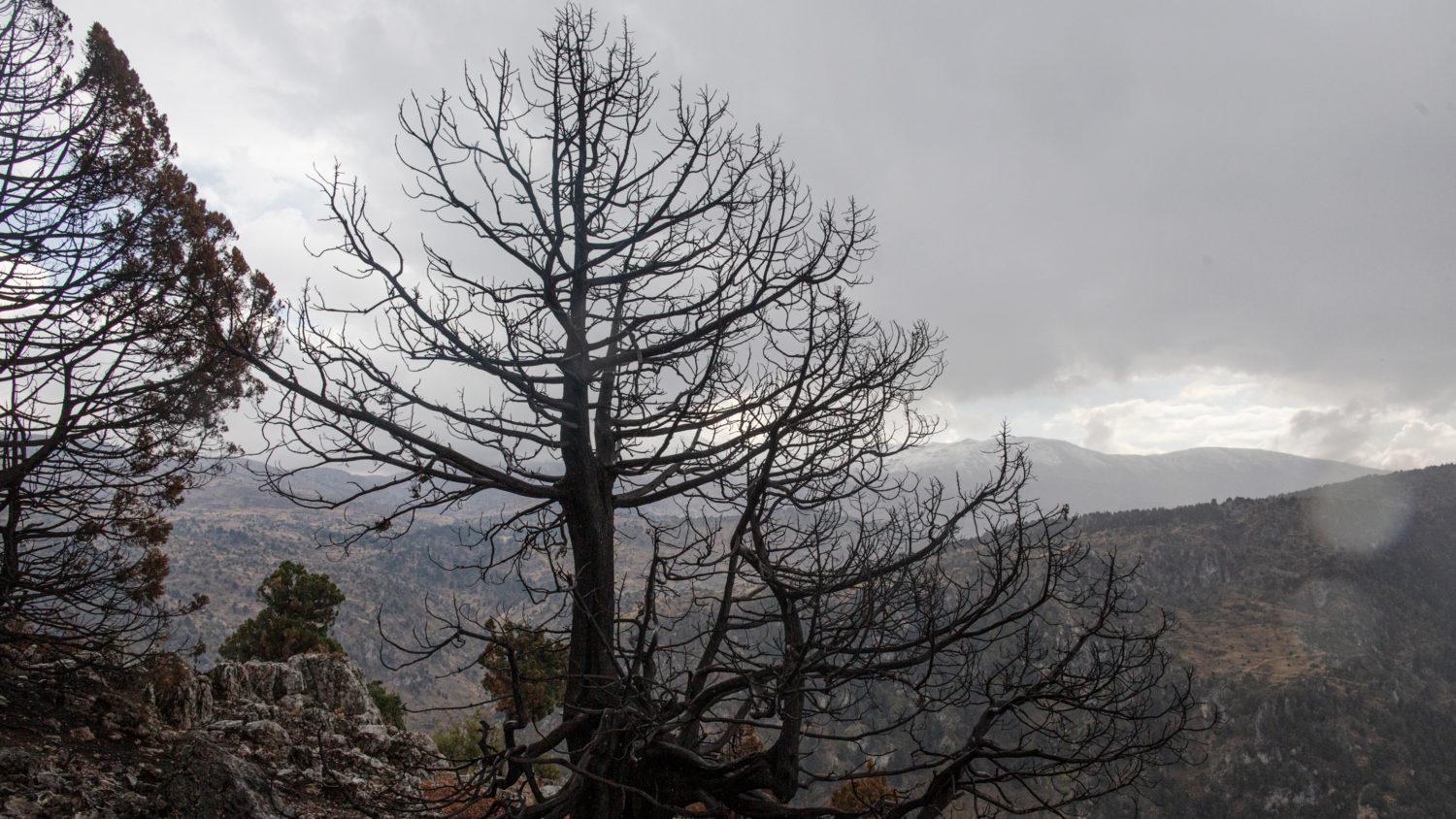
LEBANON - Lebanon’s Agriculture Ministry has introduced temporary measures allowing the emergency felling of completely dead forest trees in areas affected by pests and diseases, to limit their spread and protect healthy forests.
Agriculture Minister Nizar Hani issued a circular establishing an exceptional mechanism for what the ministry described as “sanitary cutting” of trees that have completely dried out and pose a risk to forest health.
Temporary Measure to Protect Forests
The measures are intended to enable rapid intervention while protecting living trees, natural regeneration and forest resources from unauthorized exploitation.
The ministry stressed that the circular does not constitute a general logging permit. Cutting will only be permitted when a technical inspection confirms that a tree is completely dead and that leaving it in place could contribute to the spread of pests or diseases.
Technical Inspections Required Before Cutting
Under the new mechanism, rural development departments, through specialized forest centers and in coordination with municipalities, will identify areas affected by forest pests and diseases and document the complete mortality of trees.
Forest centers must prepare a technical report detailing each tree’s location, number, species, condition and the ownership of the property on which it stands. The report must also include a map and field photographs using a standardized form prepared by the ministry.
Inspections on private property will take place in the presence of the owner or a representative. On municipal property, a municipal representative must be present, while inspections on state-owned land will be conducted by the head of the relevant rural development department with the participation of the forest center.
Once approved by the competent authority, the technical report will serve as an exceptional authorization for sanitary cutting, limited strictly to the trees identified in the document.
Living and Partially Dead Trees Excluded
The ministry said living trees and partially dead trees are excluded from the measure. It also emphasized that sanitary cutting cannot be used to change land use or facilitate forestry or urban development.
All cutting operations will be carried out under the direct supervision of the relevant forest center.
If a tree outside the approved report is cut, or if a tree that is not completely dead is removed, operations will be immediately halted and legal measures will be taken against those responsible.
Wood Must Be Treated Before Transport
The circular also establishes requirements for handling wood produced through the cutting process. The ministry said the wood must be chipped or cut on site whenever possible, or transported directly to a location designated by the relevant forest center.
There, it must be treated with approved insecticides, including lambda-cyhalothrin or deltamethrin, and properly covered.
Alternatively, the wood may be burned in a safe location with the approval of the forest center and in accordance with regulations governing the use of fire.
The measures are intended to prevent insects and other pests from spreading from infected trees to healthy ones.
Transport and Sale of Untreated Wood Banned
The ministry will restrict the transportation of wood produced through sanitary cutting. Such material may only be transported with a permit issued by the relevant forest center after authorities confirm that the required treatment has been completed.
The transportation, sale or storage of the wood before treatment is prohibited. Ownership of the wood and decisions concerning its disposal will remain subject to the ownership status of the site and applicable laws and regulations.
Following completion of each operation, authorities must prepare a final report documenting the number of trees cut, the quantity of wood produced, the treatment method, whether the wood was removed from the site, its destination and, when applicable, the transport permit number.
The report will be kept in the records of the relevant regional authority alongside photographs and supporting documents, allowing the entire process to be tracked from inspection and authorization through treatment and transportation.
Minister Hani: Measure Is Not Commercial Logging
Minister Hani said the measure reflects the ministry’s approach of managing forest resources through scientific and preventive intervention.
He stressed that sanitary cutting is not commercial logging, but an exceptional environmental measure intended to remove sources of infestation while keeping healthy trees and natural regeneration outside unnecessary intervention.
The minister said the ministry would monitor implementation through its regional departments and forest centers, while strengthening coordination with municipalities, property owners and other relevant authorities.
The circular will remain in effect from the date of its issuance until December 31, 2027. The ministry said the mechanism is intended to strengthen Lebanon’s ability to respond quickly to threats to forest health while preventing the exceptional measures from being used for unauthorized exploitation.