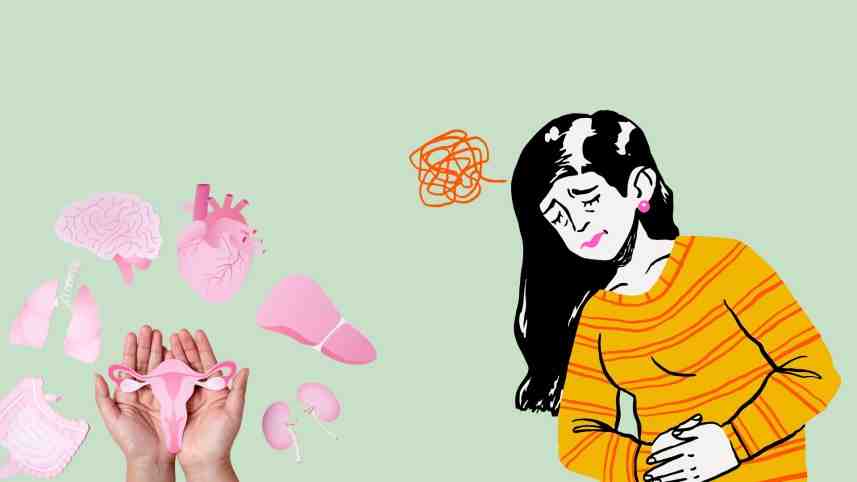








WORLD - Women live longer than men. But they spend a lot more of those years unwell. Globally, women spend 25 percent more of their lives in poor health or living with a disability than men do, according to the World Economic Forum. Much of it comes down to something more fixable: women are diagnosed later, treated with more skepticism, and studied less than men, at every stage of the healthcare system.
Pain and Women
Women who arrive with chest pain wait 29 percent longer than men to be evaluated for a possible heart attack. In a review of nearly 22,000 emergency department records, women were less likely than men to be given pain medication, even when they reported the same pain scores.
Nurses were also 10 percent less likely to even record a woman's pain score in the first place, and women spent, on average, half an hour longer in the ER before being seen.
This pattern held no matter whether the treating doctor or nurse was a man or a woman, which tells us this bias is baked into how medicine has learned to interpret women's bodies.
It shows up in smaller, more intimate ways too. Roughly 70 percent of women report moderate to severe pain during IUD (intrauterine device, a small contraceptive device placed in the uterus) insertion, yet only about 3 in 10 doctors offer anesthesia for the procedure, and nearly 4 in 10 clinics offer no pain relief at all. The advice women get instead is often just: relax.
A Decade to Get a Diagnosis
Endometriosis, a condition where tissue similar to the lining of the uterus grows outside it, causing severe pain, especially during menstruation. Takes an average of six to ten years to diagnose, depending on the country and study. In some cases, it has taken as long as 27 years.
This is not because endometriosis is rare or mysterious. It's because period pain is so normalized that severe, disruptive pain is dismissed as "just part of being a woman" rather than treated as a medical symptom worth investigating. Patients report needing to see multiple health professionals, describing their symptoms repeatedly, and often having to prove their pain is "real" before anyone orders the right tests.
Medicine was Built Without Women in the Room
This isn't only about individual doctors underestimating individual patients; it's structural. Until 1993, U.S. law did not require women to be included in clinical drug trials at all. A 1977 guideline actively excluded women of "childbearing potential" from early-stage trials, meaning most of the medications in use today were developed and dosed based almost entirely on male bodies.
That matters because sex can affect how drugs are metabolized, how symptoms present, and how much medication someone actually needs. Decades later, medicine is still catching up on basic questions about how treatments work differently in women's bodies, because the data was simply never collected.
Lebanon: the Gap, Compounded
In Lebanon, this global pattern collides with an economic crisis that has hit reproductive health especially hard. Since the currency collapse, sanitary pads and menstrual products now cost four to ten times what they did before 2019, while subsidies for essential goods left them out entirely.
Deepening what public health researchers now call "period poverty." Sexual and reproductive health, researchers note, was never high on Lebanon's public policy agenda to begin with. It has simply slipped further down the list as the country manages one emergency after another.
The healthcare system has shown real resilience in keeping emergency and maternal care running through years of crisis, but reproductive health has consistently been treated as a lower priority than it should be, even before the collapse.
Lebanese women aren't just facing the same diagnostic bias documented worldwide. They’re facing it inside a system with fewer resources, fewer specialists, and a policy environment that has rarely made their health a priority.
What Needs to Change
Closing this gap requires a more inclusive approach to healthcare. That means collecting and using sex-disaggregated health data, so treatments are tested on the bodies they're prescribed to. It also means training healthcare providers to recognize their own bias in how they interpret pain.
And in Lebanon specifically, it means protecting reproductive health funding and services, especially in a time when budgets are being cut everywhere else.
The systems meant to catch and treat women's symptoms were never built with them fully in mind, and that shows up in every extra year it takes to get a diagnosis, every dose calibrated on someone else's body, every pain score a nurse doesn't bother to write down. It's a solvable problem. But solving it starts with naming it.