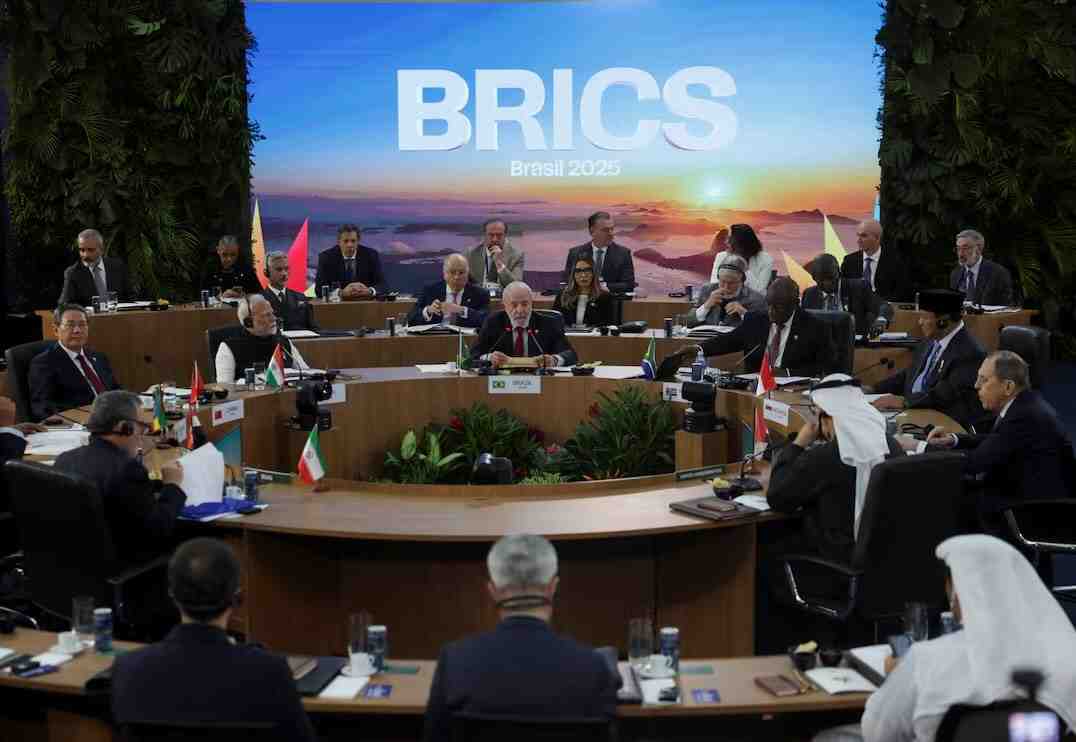





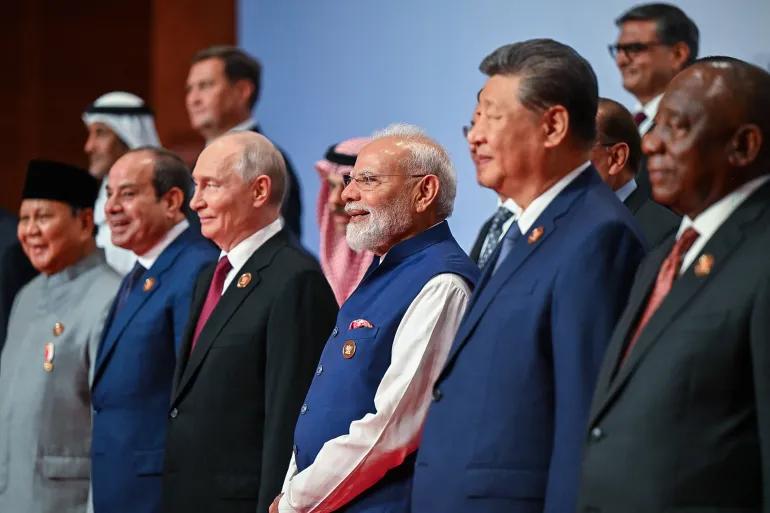
NEW DELHI – Leaders of BRICS countries adopted the New Delhi Declaration at the 18th BRICS Summit, held in New Delhi under India’s 2026 chairship, reaffirming their commitment to strengthening multilateralism, expanding the voice of the Global South and advancing cooperation on economic, technological and development issues.
The summit, held under the theme “Building for Resilience, Innovation, Cooperation and Sustainability,” marked two decades of BRICS cooperation. The declaration brings together commitments across political and security affairs, economic and financial cooperation, and cultural and people-to-people exchanges.
Push for Reform of Global Institutions
A central theme of the declaration was the reform of the international system to give emerging and developing economies greater representation.
BRICS called for comprehensive reform of the United Nations, including the Security Council, to make it more representative and responsive to current global realities. China and Russia reiterated their support for Brazil and India playing a greater role in the UN and its Security Council.
The bloc also called for reforms to the IMF, World Bank and other international financial institutions, arguing that their governance structures should better reflect the growing economic weight of emerging and developing countries. BRICS also reaffirmed its support for reforming the World Trade Organization and strengthening a rules-based multilateral trading system.
The declaration further emphasized the role of BRICS in representing the priorities of the Global South amid geopolitical tensions, economic uncertainty, technological change, protectionism and climate challenges.
Trade, Tariffs and Local Currencies
On trade, BRICS expressed concern over rising unilateral tariffs and non-tariff measures, warning that protectionist policies could disrupt global supply chains and deepen economic disparities.
The bloc reaffirmed its support for an open, fair and predictable multilateral trading system and opposed trade restrictions it considers inconsistent with World Trade Organization rules.
The declaration also advanced discussions on reducing friction in cross-border payments. BRICS members are exploring greater interoperability between payment and messaging systems and the use of local currencies for trade settlements and investment, while recognizing that approaches will differ according to national priorities.
However, the summit did not establish a common BRICS currency. Instead, the focus remained on practical mechanisms for payments, local-currency transactions and financial cooperation.
New Investment and Development Finance Initiatives
BRICS continued work on a proposed New Investment Platform, with members supporting a phased, consensus-based and member-driven approach.
The declaration also backed further development of the New Development Bank (NDB), including greater use of local-currency financing, diversified funding sources and investment in infrastructure and sustainable development projects across emerging and developing economies.
A new BRICS-NDB Knowledge Portal was welcomed as a platform for sharing development experiences, policy innovations and lessons from NDB-financed projects.
India's proposal for a BRICS Risk Lab at the GIFT City International Financial Services Centre in Gujarat also received support for further discussion, alongside work on strengthening insurance and reinsurance cooperation among members.
AI and Digital Transformation
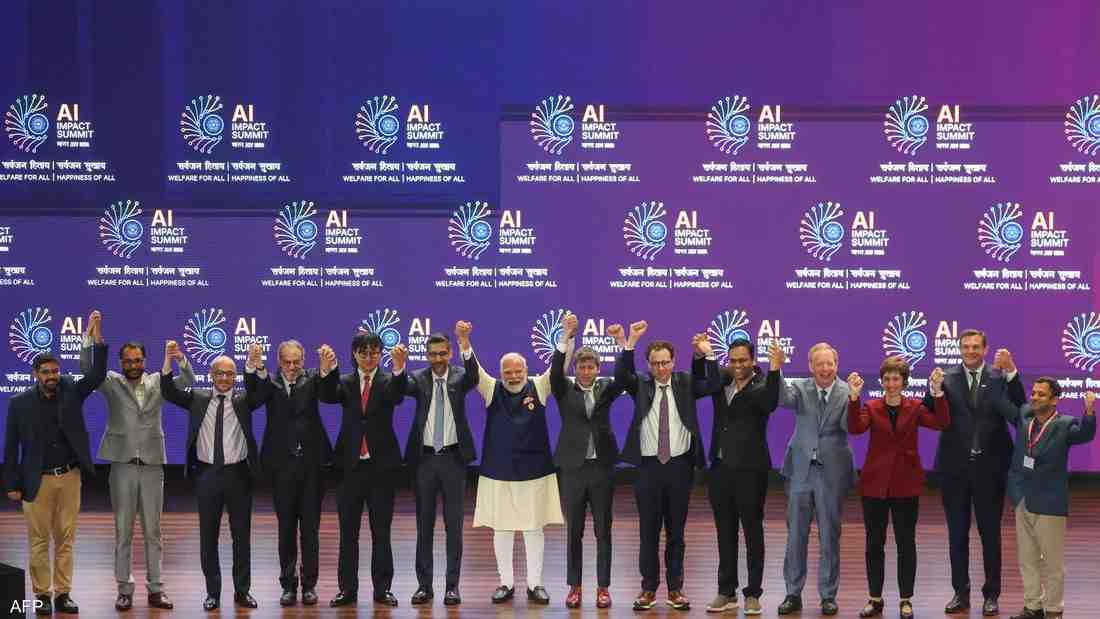
Artificial intelligence featured prominently in the declaration, with BRICS describing AI as an important driver of economic growth and sustainable development.
Members called for greater international cooperation to make AI more accessible while ensuring that systems are safe, secure, inclusive and reliable. They also highlighted AI science and innovation, energy efficiency, trustworthy AI and the need to address potential risks, particularly for countries of the Global South.
BRICS also moved forward with cooperation on digital public infrastructure, including a proposed repository for digital public infrastructure solutions and pilot projects aimed at supporting digital transformation.
The declaration highlighted the importance of interoperable and resilient digital systems, digital skills and capacity-building, while also stressing the protection of children, older people and vulnerable groups in digital environments.
The bloc further welcomed cooperation in Industry 4.0, advanced digital manufacturing, robotics, quantum technologies and scientific research.
Climate and Energy
Climate change and sustainable development were another major part of the declaration.
BRICS reaffirmed support for the Paris Agreement and called for stronger action on mitigation, adaptation, loss and damage, and climate finance for developing countries.
The bloc also stressed the need for an orderly, equitable and inclusive energy transition, while recognizing the continuing role of fossil fuels in many emerging and developing economies.
BRICS opposed unilateral and discriminatory measures that could place additional pressure on developing countries, while promoting cooperation on carbon markets, climate research and resilient infrastructure.
The declaration also covered biodiversity, forests, water, land restoration and waste management, including cooperation on sustainable lifestyles and resource efficiency.
Broader Development Agenda
Beyond geopolitics and finance, BRICS expanded cooperation across areas including transport, urban development, science, health, education, employment, tourism, culture and youth.
The declaration supports cooperation on sustainable and resilient transport, including sustainable aviation fuels, urban mobility and logistics supply chains. It also promotes people-centred urban development covering housing, water and sanitation, mobility and essential urban services.
On employment, BRICS highlighted the need for inclusive and digitally empowered labour markets and noted an initiative for an International Digital Platform for Remote Employment among member countries.
The bloc also reaffirmed the role of young people in innovation, inclusion and sustainable development, with cooperation planned across education, entrepreneurship, science and technology, social participation, health, environment and youth exchanges.
Women’s economic participation was also highlighted, including access to finance, markets, technology and skills for women-led businesses.
What Comes Next
The summit concluded India's 2026 BRICS chairship. The declaration commended India's chairship and its programme of more than 400 meetings and engagements across 30 Indian cities.
BRICS will now move into China's 2027 chairship, with Beijing set to host the next BRICS summit.
The New Delhi Declaration reflects BRICS' expanding agenda beyond economic cooperation, positioning the bloc as a platform for emerging and developing countries to coordinate on global governance, finance, technology, climate action and sustainable development.
At the same time, the breadth of the declaration highlights the challenge facing the expanded bloc: maintaining consensus among members with different political and economic interests while translating broad commitments into concrete cooperation.