


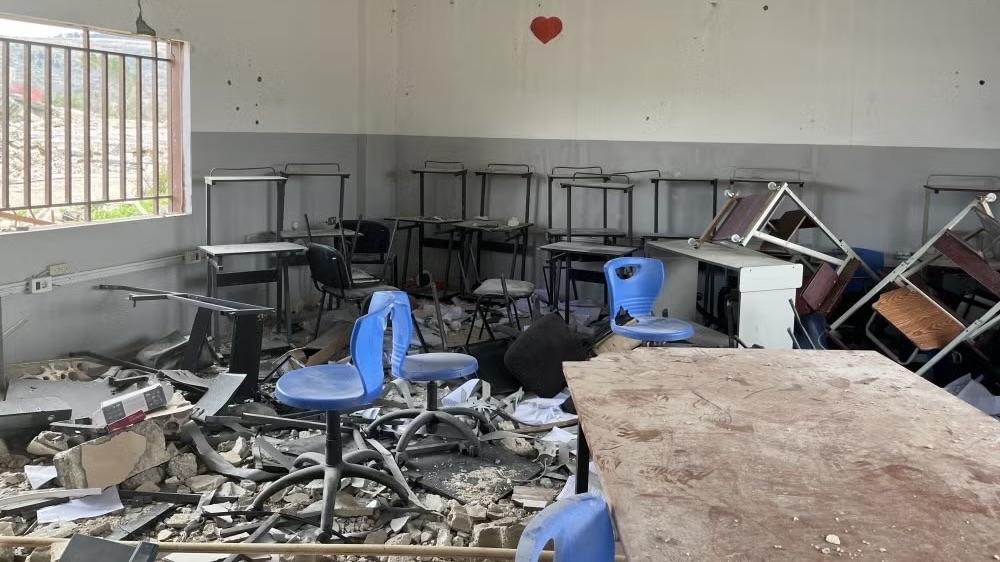
LEBANON - Nearly 27% of learners in Lebanon experienced interruptions to their education as a result of the Israeli war since March 2026, while approximately 20% were displaced, according to an assessment by the Ministry of Education and Higher Education (MEHE).
The report documents the impact on learners, education personnel and educational infrastructure, while outlining the Ministry’s emergency response and priorities for recovery.
Displacement and Disruption to Learning
Approximately 12% of teachers and other education personnel were also reported displaced. At least 86 teachers were reported killed or injured across 60 schools covered by the assessment, a documented minimum rather than a national total.
Around 200,000 learners enrolled in schools in war-affected areas faced severe disruption, while nearly 100,000 could not return to their schools because of damage, destruction, insecurity or displacement.
The figures represent different, potentially overlapping dimensions of the impact and should not be added together.
Schools Turned Into Shelters
Educational institutions also played a role in Lebanon’s displacement response. During the initial phase of the escalation, approximately 433 public educational institutions operated as collective shelters. By the end of August 2026, 99 public education facilities remained in use as shelters.
The assessment also identified substantial damage to educational infrastructure. Of 1,089 facilities assessed in accessible areas, 436 reported being affected by at least one attack since March 2, 2026. Among them, 64 were classified as severely damaged and 37 as destroyed.
The Ministry noted that the findings do not constitute a complete national estimate, as access and verification remained limited in some areas. Further engineering assessments are needed to determine structural safety and rehabilitation requirements.
Support Services and Emergency Response
The disruption also affected learners’ access to psychosocial support, protection and inclusive education services. MEHE monitoring found that 26.41% of learners within the inclusive education system experienced displacement.
The Ministry maintained referral pathways, recording 2,562 learners referred for therapy services and 253 for assistive devices.
More than 2,000 Ministry staff were mobilized to support the emergency response. Educational provision was adapted through on-site, online and hybrid arrangements to maintain access to learning amid changing security and displacement conditions.
However, the Ministry noted that maintaining educational services did not necessarily ensure consistent participation or effective learning.
Recovery Priorities
MEHE identified restoring educational continuity, rehabilitating safe learning environments, strengthening learner protection and well-being, supporting education personnel and reinforcing institutional preparedness as key recovery priorities.
Interventions will be guided by the severity of damage, educational needs, vulnerability and geographic conditions.
The Ministry said recovery will be assessed not only through repaired facilities and restored services, but also by whether affected learners return to school, participate consistently, receive necessary support and make progress in their education.


