LEBANON - As artificial intelligence increasingly transforms education, employment, and public services, Lebanon faces a growing challenge: how to embrace emerging technologies while ensuring their responsible and sustainable use.
These questions took center stage on Thursday, November 5, as the Holy Spirit University of Kaslik (USEK) launched its first International Conference on Artificial Intelligence in Higher Education (ICAIH 2026).
Held on November 5–6 under the patronage of Prime Minister Nawaf Salam, the conference brings together government officials, academics, researchers, and industry experts to examine AI's implications for education, innovation, governance, and society.
Under the theme “Rethinking Education, Ethics, and Innovation,” the two-day event addresses curriculum development, academic integrity, emerging workforce skills, and the role of universities in preparing students for an AI-driven future.
From AI Adoption to National Transformation
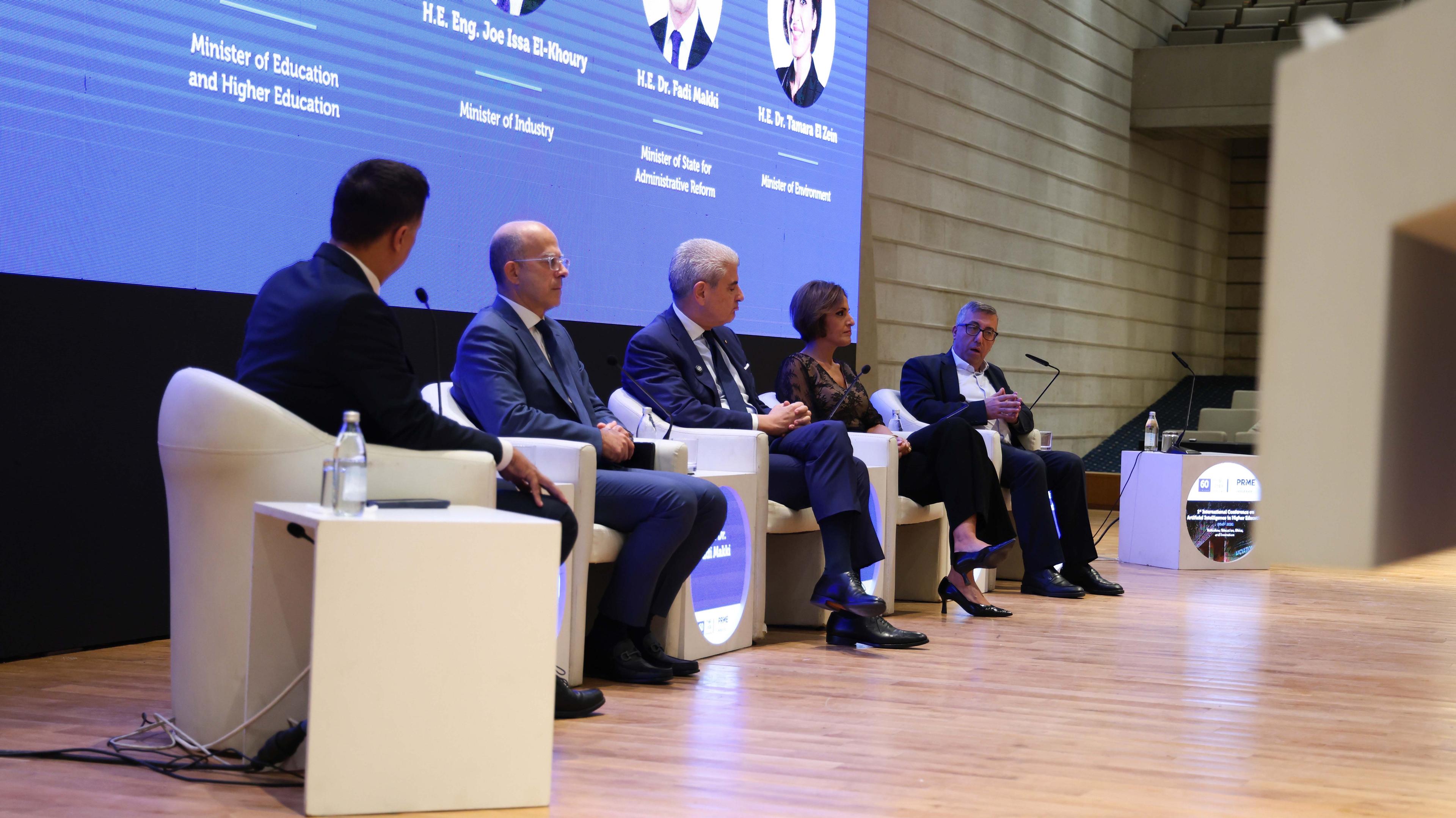
The opening panel, “AI, Higher Education, and National Transformation: From Vision to Action,” brought together ministers and government representatives to discuss Lebanon's readiness for technological change.
Minister of Environment Tamara El Zein drew attention to the often-overlooked environmental consequences of artificial intelligence.
She warned that AI is frequently perceived as an intangible, virtual technology, creating the misleading impression that its use carries no physical environmental consequences.
Minister El Zein highlighted the energy consumption and environmental pressures associated with data centers and AI applications, stressing the importance of environmental awareness and responsible technology use.
Minister of State for Administrative Reform Fadi Makki emphasized the importance of strengthening public-sector capacities to support digital transformation.
He highlighted the need to equip public employees with the skills to integrate AI into administrative processes, alongside developing policies through collaboration between government institutions, the private sector, and other stakeholders.
Minister of Industry Joe Issa El-Khoury discussed efforts to digitize administrative procedures for industrial businesses, reducing reliance on paperwork and facilitating interactions with the ministry.
AI in Education: Supporting Skills, Not Replacing Them
Representing the Ministry of Education and Higher Education, Dr. Mazen Al-Khatib emphasized that AI should be viewed as a tool that strengthens students' existing knowledge and abilities rather than replacing them.
He noted that the ministry encourages the responsible use of AI across educational disciplines, while recognizing the need for clear ethical guidelines.
However, he acknowledged that AI has yet to be meaningfully integrated into educational curricula.
He also pointed to structural challenges, including staffing restrictions, outdated systems, and limited funding, which continue to constrain the ministry's ability to modernize education and adopt emerging technologies.
Rethinking Higher Education for an AI-Driven Future
Beyond the opening discussions, ICAIH 2026 features panels, research presentations, and exchanges on AI in teaching, research, healthcare, business, and sustainable innovation.
The conference also explores human rights, ethical governance, and the relationship between artificial intelligence and human decision-making.
As discussions continue on Friday, November 6, the conference highlights the importance of connecting technological innovation with institutional readiness, educational reform, and environmental responsibility.
For Lebanon, the challenge extends beyond adopting AI tools to building the skills, policies, and safeguards needed to ensure that technological progress contributes to sustainable development.