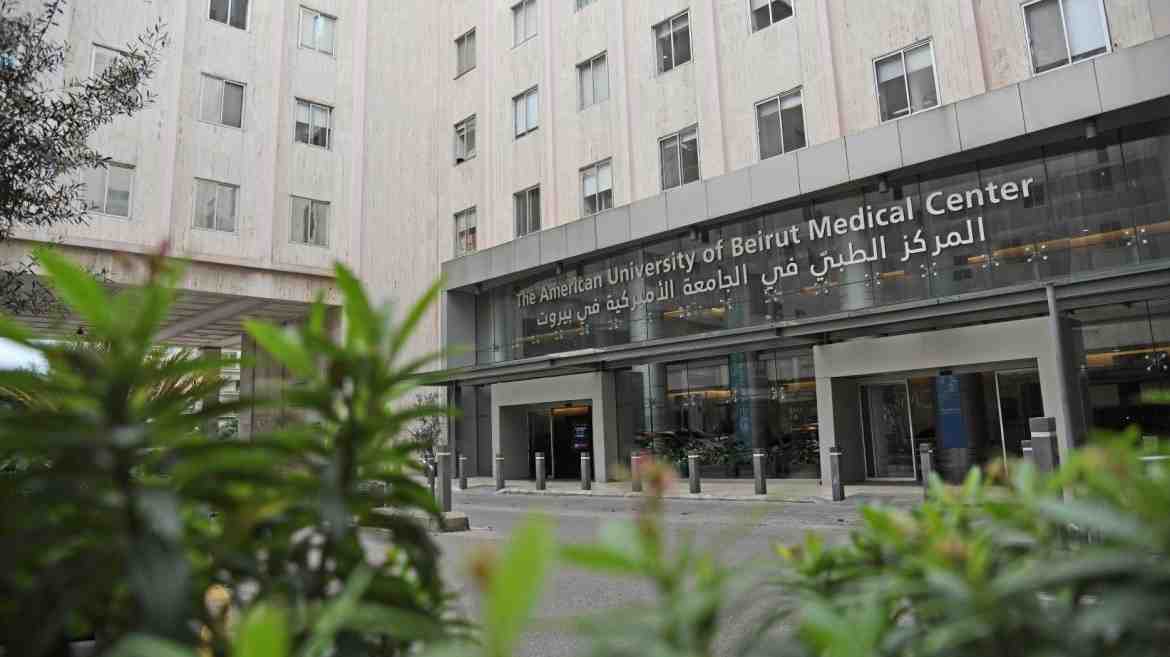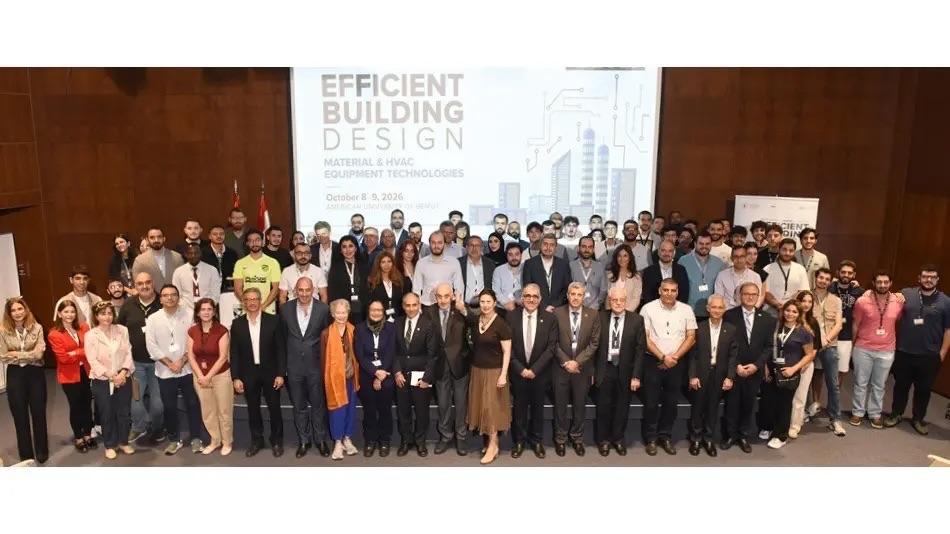
BEIRUT - More than 300 researchers, engineers, and industry professionals gathered at the American University of Beirut (AUB) for the 7th International Conference on Efficient Building Design – Materials and HVAC Equipment Technologies, exploring solutions to improve energy efficiency, sustainability, and resilience in buildings and cities.
Organized by AUB’s Munib & Angela Masri Institute of Energy and Natural Resources, the American Society of Heating, Refrigerating and Air-Conditioning Engineers (ASHRAE), the ASHRAE Lebanese Chapter and AUB’s Department of Mechanical Engineering, the two-day conference brought together local and international experts from academia and industry.
Focus on Smart Buildings and Energy Efficiency
Held biennially at AUB, the conference examined smart and energy-efficient buildings, advanced heating, ventilation and air-conditioning (HVAC) technologies, sustainable design, indoor air quality, thermal comfort and urban energy planning.
This year’s program also addressed the growing role of digital technologies and artificial intelligence in building design and energy management.
The event featured four international keynote speakers, five technical sessions, a panel discussion and an industrial session.
The keynote speakers included Dolaana Khovalyg of the École Polytechnique Fédérale de Lausanne, Muhyiddine Jradi of the University of Southern Denmark, Assaad Zoughaib of Mines Paris–PSL and Alessia Arteconi of KU Leuven. Their presentations explored smart building solutions, heating and cooling technologies, and energy flexibility.
Regional Challenges and Future Solutions
Opening the conference, Dr. Nesreen Ghaddar, conference chair and director of the Masri Institute, highlighted the collective effort behind the event, emphasizing the importance of collaboration and knowledge exchange.
ASHRAE President Sarah Maston stressed the role of education and professional training in preparing the next generation of specialists, describing the conference as a space for industry leaders to share ideas and technologies.
AUB Provost Dr. Zaher Dawy said the university had a responsibility to translate research and knowledge into practical solutions, particularly amid the considerable challenges facing the world.
Omar Masri, a member of the Masri Institute's advisory council, said the Middle East could become a testing ground for solutions to global energy and climate challenges, including extreme-heat design, efficient cooling, thermal storage, microgrids and climate-resilient buildings.
He added that future buildings would need not only to consume less energy but also to manage when energy is generated, stored and used.
In his closing remarks, Maroun Semaan, Faculty of Engineering and Architecture Dean Professor Alan Shihadeh linked energy efficiency to the region's broader geopolitical challenges, noting that energy resources have long been intertwined with regional conflicts.
"Saved energy starves the war engine," he said, arguing that reducing energy consumption could also limit the need for energy generation, extraction and transportation.
The conference concluded with discussions on urban energy planning, city resilience and industry-led innovations, providing a platform to examine practical approaches to more sustainable and efficient built environments.