







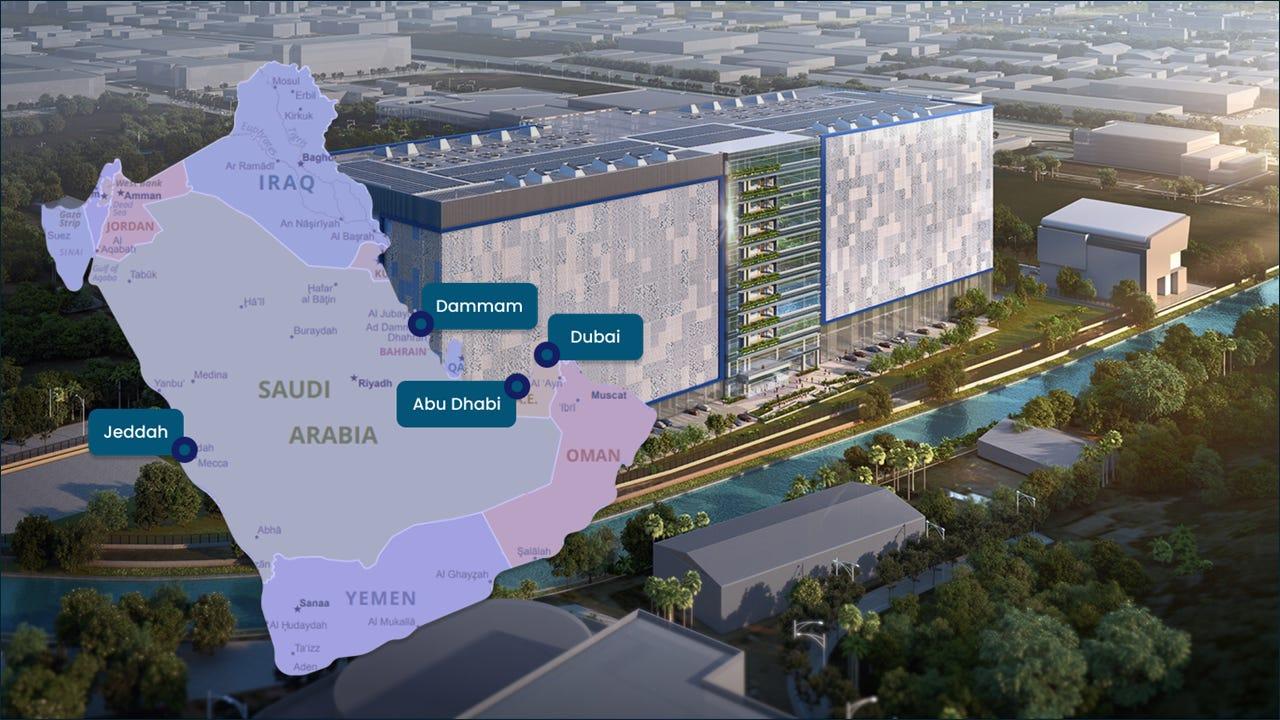
MIDDLE EAST - As Gulf states build AI cities and tech ecosystems, what does that mean for smaller states and minority populations across the region?
“The Middle East is no longer only a battleground of geopolitics.
It is becoming a battleground of data.”
Across the Gulf, governments are investing billions in artificial intelligence, cloud infrastructure, semiconductor partnerships, advanced research centers, and smart cities. Digital sovereignty has become a strategic priority.
Control the data.
Control the platforms.
Control the narrative.
But in every race, someone sets the pace, and someone struggles to keep up.
The question is not whether the region will become more digital.
It will.
The question is who will shape the architecture of that future, and who will simply be absorbed by it.
What Digital Sovereignty Really Means
Digital sovereignty is often framed as national control over data and infrastructure.
Own the servers.
Localize the cloud.
Build national AI models.
Reduce dependency on foreign tech giants.
These are legitimate goals.
But sovereignty in the digital age is not only about ownership.
It is about leverage.
Who sets the standards.
Who defines regulatory frameworks.
Who trains foundational models.
Who controls critical computing capacity.
Once standards scale, they shape markets across borders.
Sovereignty therefore becomes the power to influence the ecosystem, not merely operate within it.
A Region Moving at Two Speeds
The Gulf is accelerating through concentrated capital, centralized strategy, and long-term investment in AI ecosystems.
National AI strategies.
Sovereign wealth funds backing global tech ventures.
High-performance computing infrastructure.
Integrated digital governance platforms.
Meanwhile, many smaller states across the region face different realities:
Limited fiscal space.
Institutional fragmentation.
Brain drain in advanced technology sectors.
Dependence on imported digital platforms.
This creates a two-speed digital region.
One group defines the architecture.
The other integrates into it.
The structural question is whether integration becomes partnership or dependency.
The Power to Define the Dataset
Artificial intelligence systems are trained on data.
Data reflects economic scale, language dominance, regulatory clarity, and institutional stability.
When AI models are developed in digitally advanced environments, they are optimized for structured economies with reliable documentation, formalized markets, and stable regulatory systems.
But the Middle East is economically and institutionally diverse:
Large informal sectors.
Regulatory inconsistencies.
Administrative complexity.
If regional AI ecosystems are trained primarily on high-income, highly structured environments, they will reflect that structure.
This is not malicious.
It is mathematical.
What dominates the data shapes the model.
Digital sovereignty therefore extends beyond geopolitical independence. It includes the ability to ensure that national economic realities are not misrepresented inside regional digital systems.
Smaller States in the Shadow of Digital Giants
When technologically advanced countries establish AI standards and digital infrastructure frameworks, smaller states often adopt ready-made solutions:
Cloud ecosystems.
AI-enabled public platforms.
Cybersecurity architectures.
Cross-border digital payment systems.
These systems carry embedded assumptions about regulatory alignment, data quality, institutional capacity, and economic traceability.
In states where these foundations are uneven, friction emerges.
Digital transformation can then become externally structured rather than internally shaped.
Over time, this affects bargaining power.
Digital infrastructure is sticky. Once embedded deeply into public administration and economic systems, it becomes costly and complex to replace.
Sovereignty in this context is measured by adaptability and negotiating strength, not only ownership.
Beyond Technology: A Strategic Economic Shift
The digital sovereignty race is not merely about innovation branding.
It represents a long-term restructuring of regional economic influence.
States that control AI research pipelines, advanced computing resources, and digital standards will shape:
Trade flows.
Financial technologies.
Logistics optimization.
Cybersecurity frameworks.
Emerging regulatory norms.
For smaller economies, the challenge is clear:
How to integrate into regional digital systems while preserving strategic flexibility.
How to develop domestic talent pipelines that reduce total reliance on external expertise.
How to participate in shaping standards rather than only complying with them.
Rethinking Sovereignty as Shared Infrastructure
If the Middle East seeks sustainable digital leadership, sovereignty must evolve beyond symbolic autonomy.
It should include:
Regional research collaboration instead of one-directional technology transfer.
Joint regulatory dialogues that include smaller economies.
Distributed investment in AI education and computing capacity.
Interoperable standards that allow adaptation rather than rigid alignment.
Sovereignty in the digital era is layered:
Geopolitical.
Economic.
Technological.
Institutional.
Ignoring any layer weakens the whole structure.
Who Gets Left Behind
The digital sovereignty race will produce visible winners:
AI hubs.
Innovation corridors.
Global technology partnerships.
Capital concentration.
But the deeper question is structural.
Will smaller states secure meaningful influence within the regional digital order?
Or will they operate inside architectures designed without their participation?
The Middle East stands at a decisive moment.
Data power is becoming as consequential as energy power once was.
The region’s long-term stability will depend not only on technological ambition, but on whether the digital ecosystem distributes influence alongside innovation.
Because in the emerging AI era, sovereignty will not be measured only by strategy documents or smart city skylines.
It will be measured by who shapes the code, and who merely runs it.