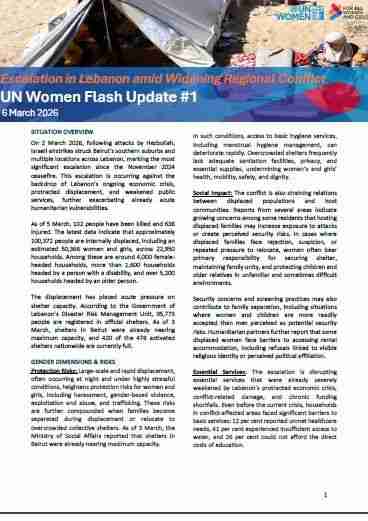






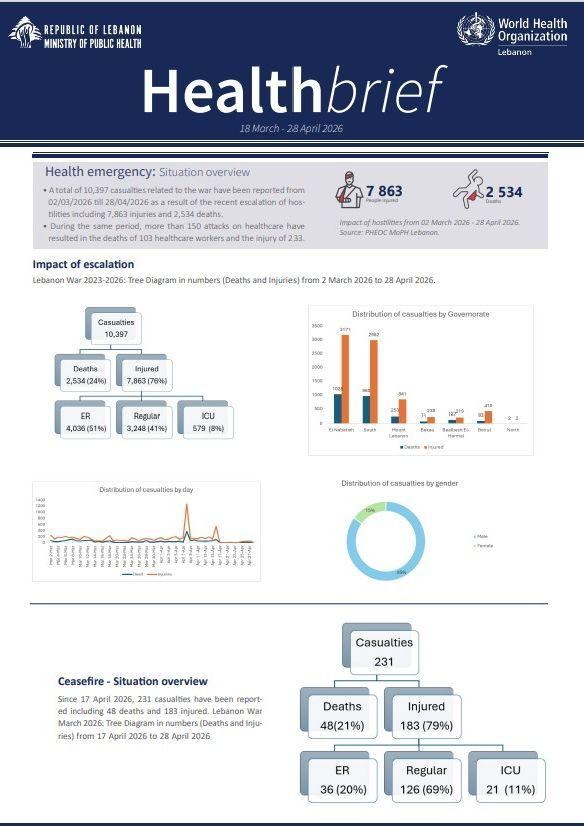

The HealthBrief (18 March – 28 April 2026) was published by the World Health Organization (WHO) Lebanon in coordination with the Ministry of Public Health. The report provides an overview of the public health impact of the recent escalation of hostilities in Lebanon, examining casualties, pressure on the health system, displacement conditions, disease risks, and ongoing emergency response efforts. It aims to inform humanitarian coordination and highlight urgent health system needs amid continued conflict.
Key insights:
Over 10,397 casualties were reported between 2 March and 28 April 2026, including 2,534 deaths and 7,863 injuries, with the majority concentrated in Nabatiyeh and South Lebanon.
More than 150 attacks on healthcare have been recorded, resulting in the deaths of over 100 health workers and widespread damage to hospitals and primary healthcare centers, limiting access to essential services.
Displacement remains significant, with over 116,000 people living in 621 collective shelters, many facing overcrowding, limited services, and ongoing uncertainty despite the ceasefire.
Hospitals are under extreme pressure, with emergency rooms overcrowded, ICU capacity strained, and shortages of critical supplies—particularly for trauma care, dialysis, and chronic disease management.
Public health risks persist, including rising cases of food- and waterborne diseases and localized outbreaks such as Hepatitis A, while vaccination gaps and disrupted services increase vulnerability to preventable diseases.
Supply chains remain fragile, with gaps in essential medicines (including chronic disease treatments), though international support has delivered trauma kits, insulin, and medical supplies to sustain emergency response.
WHO and partners continue emergency response efforts, including hospital support, mental health services, WASH interventions, and coordination with national authorities, but sustained funding and assistance remain critical to maintain life-saving services.