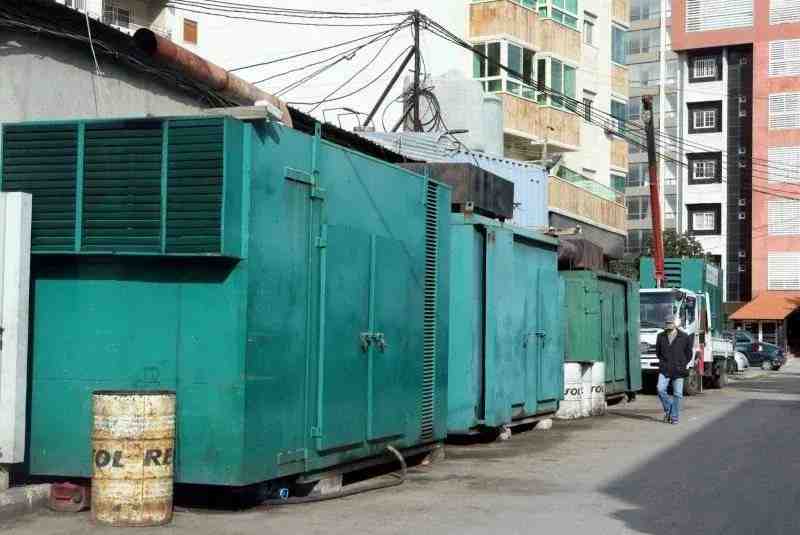








LEBANON - For nearly three decades, Lebanon's electricity crisis has forced households and businesses to depend on private diesel generators to bridge the gap left by an unreliable public electricity supply. What was once intended as a temporary solution has gradually evolved into an indispensable component of the country's energy system.
Following Lebanon's 2019 economic collapse, Electricity of Lebanon (EDL) was providing as little as one to two hours of electricity per day in 2022, leaving private generators as the primary source of electricity for much of the population.
While diesel generators have become essential, they have also become an overlooked environmental and public health challenge. The energy sector accounts for approximately 55% of Lebanon's greenhouse gas emissions, and the increased reliance on diesel generators has further intensified air pollution, particularly in densely populated urban areas.
The Price We Don't See
The sound of a generator is familiar to almost every Lebanese neighborhood. Less visible, however, are the pollutants released into the air every day. Diesel combustion emits particulate matter (PM₂.₅), nitrogen oxides (NOₓ), carbon monoxide (CO), hydrocarbons, and greenhouse gases.
Among these, fine particulate matter is particularly hazardous because it penetrates deep into the lungs and can even enter the bloodstream, increasing the risk of respiratory and cardiovascular diseases, lung cancer, and premature mortality.
Recognizing the growing health risks associated with diesel emissions, the Ministry of Environment introduced regulations in 2023 requiring larger diesel generators to install particulate filters to reduce harmful emissions.
While the regulation represents an important step forward, it should not be viewed as a complete solution. Particulate filters significantly reduce diesel particulate emissions but do not eliminate all pollutants released by generators, including carbon monoxide, nitrogen oxides, and hydrocarbons.
The Political Economy of Private Generators in Lebanon
In Lebanon, estimates put the number of diesel generators at between 32,000 and 37,000, mainly dispersed in dense urban areas.
Generator owners have established complex business and power structures that are resistant to reforms and regulations, and that maintain close ties with politicians, municipal officials, and security forces.
These generator owners often exert significant local influence, forming collusive networks that distribute operations across neighborhoods, effectively acting as an informal ‘mafia’ contributing to the political patronage system.
They also donate free electricity to municipalities and religious institutions within their territories, strengthening their power and loyalty at the local level. Their influence is further reinforced by their control over neighborhood networks and their ability to intimidate residents who oppose their operations.
Lebanon's dependence on diesel generators is not only the result of chronic electricity shortages but also of a political economy that has allowed generators to become deeply embedded in the country's energy system.
Over the past three decades, diesel generators have evolved from temporary emergency solutions into a parallel electricity network that supplies most households while supporting a sizeable economic sector involving fuel imports, generator operators, and maintenance services.
The coexistence of public electricity, private generators, and emerging renewable technologies, such as solar panels, has created a "hybridized" energy system, where competing economic interests make electricity reforms and environmental regulations more difficult to implement.
The Way Forward
Moving beyond Lebanon's dependence on diesel generators requires more than replacing one source of electricity with another; it requires creating an enabling environment where renewable energy becomes a driver of sustainable economic development.
Micro-, small-, and medium-sized enterprises (MSMEs), which constitute approximately 95% of Lebanon's private enterprises and are a major source of employment and economic activity, are well positioned to lead this transition.
The 2024 LCPS policy paper, A Decentralized Framework for Lebanon's Electricity Sector, proposes a decentralized electricity model for Lebanon, highlighting the role of distributed renewable energy.
Through providing solar photovoltaic installation, battery storage, energy-efficiency services, operation and maintenance, and other clean energy solutions, MSMEs can accelerate the deployment of decentralized renewable energy while fostering innovation and strengthening local value chains.
However, unlocking this potential requires targeted policy support. Improving access to green finance, strengthening technical and vocational training, establishing a stable regulatory framework, and encouraging public-private partnerships would enable MSMEs to scale up clean energy solutions while creating green jobs and stimulating local economic growth.
Such measures would also improve energy security, reduce dependence on imported fossil fuels, lower operating costs for businesses, and enhance the resilience and competitiveness of Lebanon's economy.
Ultimately, Lebanon's electricity crisis presents an opportunity to rethink its development pathway. Rather than sustaining an economy built around diesel generators, policymakers could empower MSMEs to become the backbone of a decentralized, renewable energy economy that simultaneously advances environmental protection, economic resilience, and social well-being.