






LEBANON - The first half of 2026 saw severe disruptions to Lebanon’s education sector as the escalation displaced around 1.2 million people, including approximately 20% of learners, according to a new report by the Ministry of Education and Higher Education (MEHE) and its partners.
The report, The Impact of the War on Lebanon’s Education Sector, said at least 86 teachers were killed or injured, while 436 educational facilities were affected by at least one attack. Of these, 37 facilities were destroyed and 64 sustained severe damage.
The impact was particularly significant in the South and Nabatieh, which together accounted for 286 of the 436 affected facilities.
Learning Disrupted
According to the report, around 27% of learners nationwide experienced interruptions to their education, with the number rising to approximately 200,000 learners in war-affected areas who faced severe disruption.
Nearly 100,000 learners were unable to return to their schools because of damage, destruction, insecurity or displacement. The report also noted that many learners lacked reliable access to devices, internet connectivity and other forms of educational support.
During the escalation, 433 public educational institutions were repurposed as shelters for displaced families, while more than 2,000 staff members were mobilized to support the emergency response and maintain learning continuity.
Impact on Children and Teachers
The report highlighted significant concerns over children's protection, well-being and inclusion. MEHE data showed that self-harm and suicide attempts represented 5.9% of recorded forms of violence, while suicidal ideation accounted for 3.7%.
Learners with special educational needs were also disproportionately affected, with around 26% displaced, disrupting access to therapy, assistive devices, transportation and specialized support.
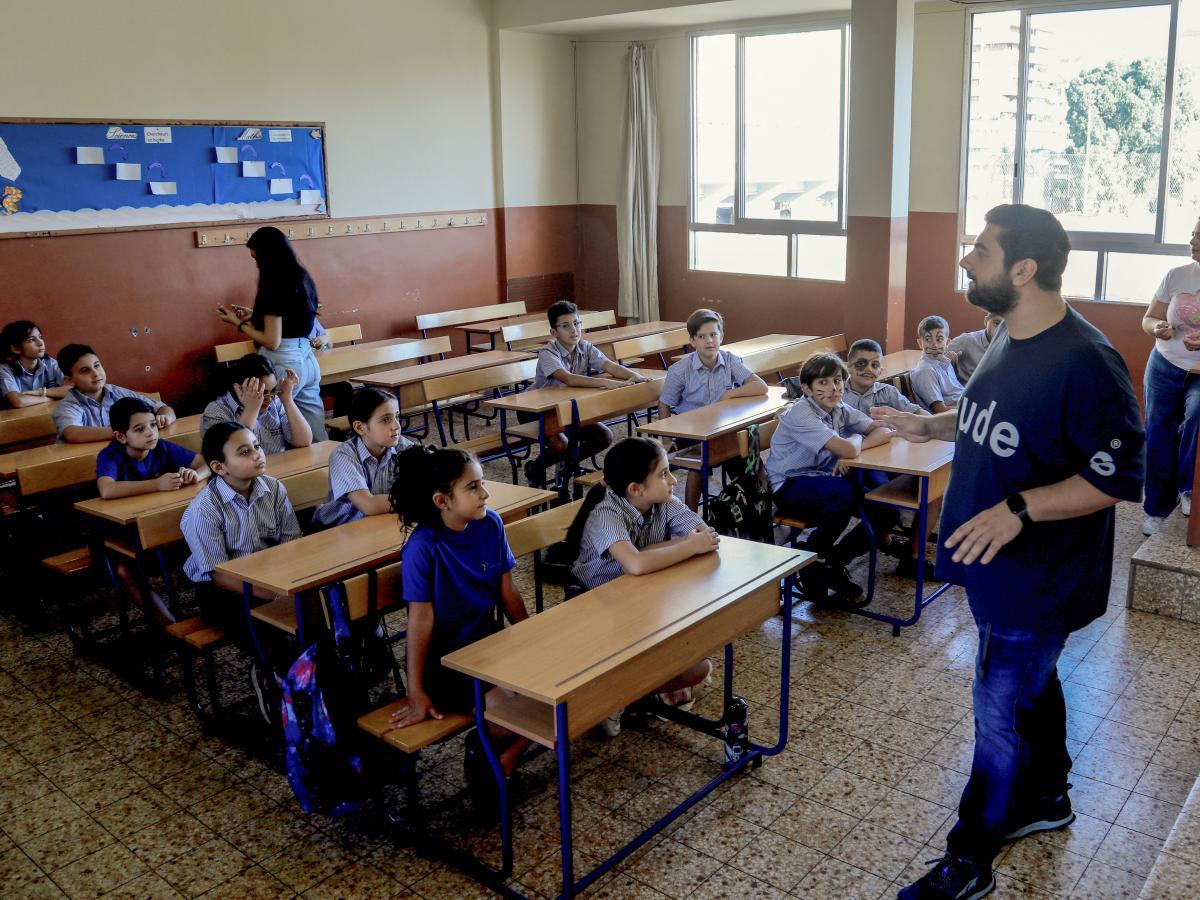
Despite the disruption, the education sector maintained several learning pathways, including in-person education in alternative buildings, blended learning and temporary distance learning.
Recovery Priorities
As Lebanon prepares for the 2026–2027 school year, MEHE said it is shifting from emergency learning continuity toward learning recovery, with priorities including restoring learning, repairing damaged schools, strengthening child protection and psychosocial support, and supporting teachers and education staff.
The ministry also plans to use a needs-based approach to determine recovery priorities and strengthen the education system’s ability to withstand future shocks.