







BEIRUT — The World Food Programme (WFP) assisted 715,910 people across Lebanon in August 2026, as humanitarian needs continued amid ongoing hostilities, displacement and economic pressures.
According to WFP’s September 2026 Lebanon Country Brief, the organisation distributed 543 metric tonnes of food and transferred USD 17.5 million in cash assistance during the month. WFP said it requires USD 186.3 million to cover its needs over the six months from September 2026 to February 2027.
Since the escalation of hostilities in March, WFP has reached 1.1 million conflict-affected people across Lebanon through cash, food and emergency assistance. Its response included USD 36.1 million in cash assistance, representing 77 percent of total support, alongside 2,144 metric tonnes of food assistance.
Emergency Assistance Continues
WFP-supported community kitchens operated in six locations across Lebanon during August, providing around 4,500 hot meals each day to displaced people in 31 shelters. Since the escalation, emergency food interventions have also included more than 9.5 million hot meals, 51,000 ready-to-eat rations and more than 600,000 bread packs, food parcels and nutritious snacks.
Through the national Shock Responsive Safety Net, WFP transferred USD 8.6 million in emergency cash assistance to 266,800 people in August. The assistance provided USD 20 per person, with an additional USD 45 top-up for households of five members.
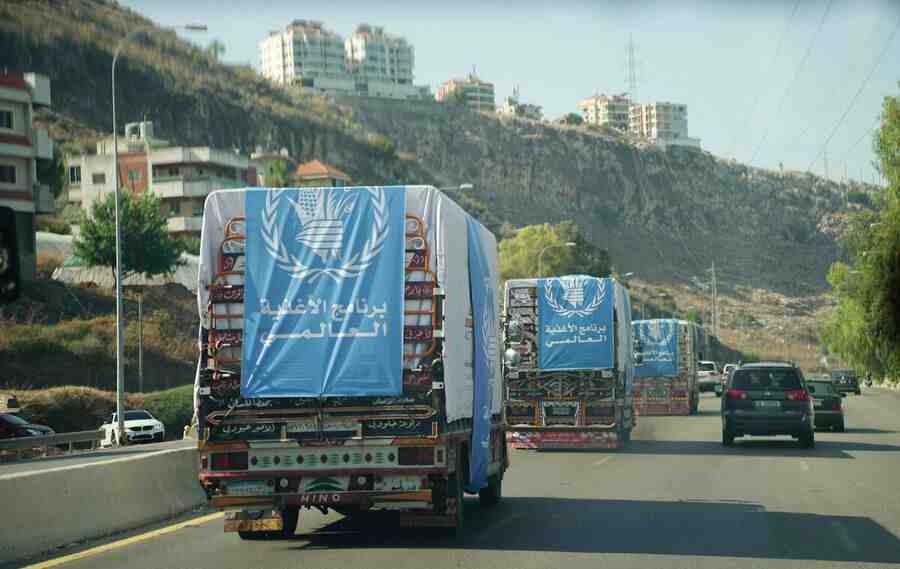
The WFP-led Logistics Cluster also facilitated 41 humanitarian convoys since the escalation, supporting the delivery of assistance to almost 126,000 people in hard-to-reach areas.
Assistance for Displaced Syrians
WFP delivered around 460,000 hot meals to 14,700 displaced Syrians living in 70 shelters across Baalbek-Hermel, North Lebanon and Akkar.
The organisation also began a third round of in-kind food distributions between August 27 and September 11, targeting 2,260 displaced Syrian households in Baalbek and Hermel that were able to prepare meals independently, as part of a gradual transition from hot meals to household food assistance.
Support for Lebanese Households
WFP launched its delayed August food distribution cycle on August 19, targeting 46,000 Lebanese people through 23,000 food parcels, equivalent to 423 metric tonnes of food.
During the month, WFP also provided USD 6.53 million in cash assistance to 282,500 Lebanese people nationwide. This included USD 5.26 million in multi-purpose cash assistance for 40,000 households and USD 1.27 million in food assistance for 15,000 households.
National Assistance Registry Expands
WFP continued supporting the Ministry of Social Affairs in digitising and strengthening Lebanon’s social assistance systems.
Seven assistance datasets have now been consolidated into the Integrated Beneficiary Registry, hosted on Ministry servers, creating a master registry covering 1.54 million people. WFP said the registry is increasingly being used for emergency caseload management, targeting and data exchange between partners.
School Meals and Agricultural Support
During August, WFP supported the Ministry of Education and Higher Education’s Summer School Programme, providing daily nutritious snacks to more than 32,000 students in 174 public schools between August 3 and 27.
WFP also secured a new three-year grant funded by the Republic of Korea to strengthen home-grown school feeding in Lebanon and Yemen. In Lebanon, the project will support 500 farmers, three agri-food enterprises and 2,000 students in North Lebanon and Akkar by strengthening local food value chains and increasing the supply of locally produced nutritious food to schools.
Funding Gaps Remain
Despite humanitarian assistance reaching more than 365,000 people through food assistance and agricultural support during the reporting period, funding shortages continue to affect the sector.
According to WFP, food assistance activities are currently 31 percent funded, while agriculture and livelihoods interventions are 14 percent funded, limiting partners’ ability to sustain assistance, support agricultural production and strengthen the resilience of vulnerable households and rural communities.
WFP said USD 186.3 million is required over the next six months, from September 2026 through February 2027.