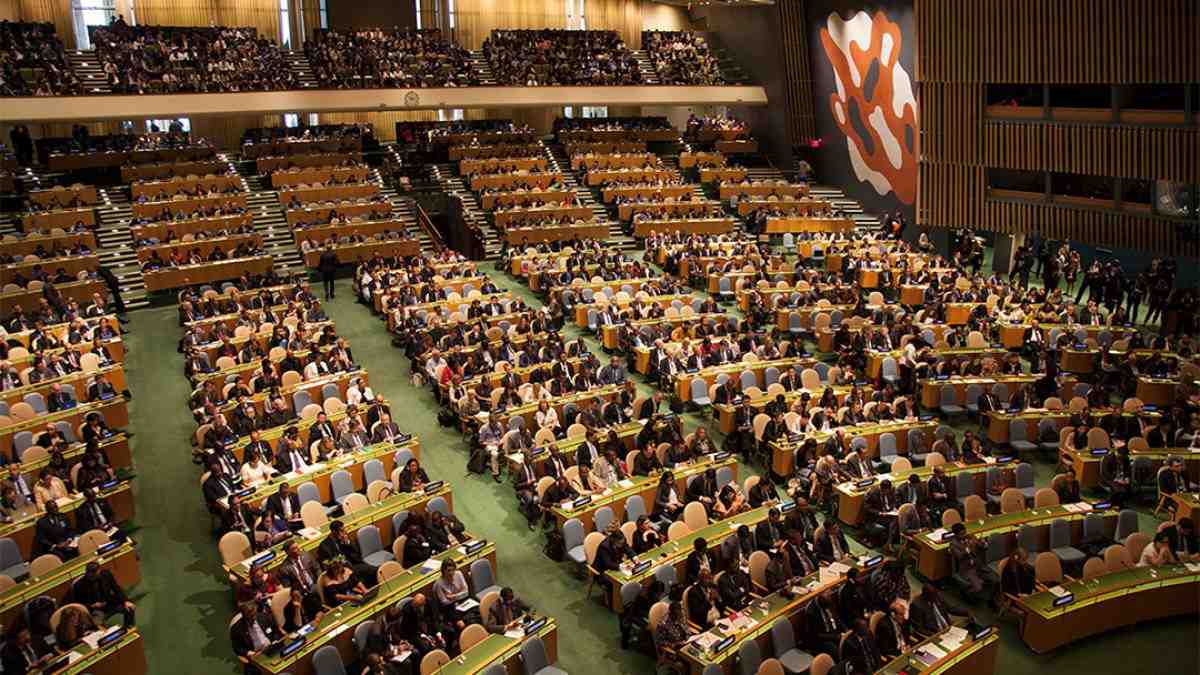







AMERICA - The United Nations opened its SDG Media Zone on Monday on the sidelines of the 81st session of the UN General Assembly, bringing together journalists, young advocates, UN officials and other public figures for discussions on peace, sustainable development, technology and human rights.
Organized by the UN Department of Global Communications in collaboration with the PVBLIC Foundation, the five-day SDG Media Zone aims to bring conversations around the Sustainable Development Goals into the public sphere through interviews and discussions on issues affecting communities around the world.
Youth and Peace at the Center
The opening featured a video message from UN Secretary-General António Guterres, followed by remarks from Melissa Fleming, UN Under-Secretary-General for Global Communications. A dedicated message of hope was also delivered by Israa, the subject of a new documentary film by FRONTLINE PBS.
The opening was followed by an intergenerational UN Peace Circle, held to mark the International Day of Peace on September 21. The discussion brought together youth advocates and UN representatives to examine how investment in young people and their participation in peacebuilding can contribute to more peaceful societies.
The session formed part of the UN's “Hear Us. Act Now for a Peaceful World” campaign, which promotes greater inclusion of and investment in youth in peace and decision-making processes. The initiative also contributes to a forthcoming independent progress study on how young people contribute to peace, mandated under the Pact for the Future.
Participants included UN Refugee Agency Goodwill Ambassador Mary Maker, UN Development Programme India Youth Champion Sanjana Sanghi, UNICEF Goodwill Ambassador Muzoon Almellehan, Migration Youth and Children Platform representative Jonathan Lam, Children of Ukraine Foundation Director Sofia Polishchuk and World Scouting youth representative Noor Al Musallam.
AI and Access to Trusted Data
The day's programme also turns to the intersection of artificial intelligence, data and human development.
A session on the UN System Data Commons examines efforts to create a single entry point for authoritative public data and statistics across the UN system. The initiative is intended to make UN data more accessible to policymakers, journalists and researchers while preparing it for use by AI-enabled tools with traceable sources.
Another discussion focuses on human agency in the age of AI, particularly the growing presence of artificial intelligence in children's lives. Actor and filmmaker Joseph Gordon-Levitt, a UN Global Advocate for Human-centric Digital Governance, is scheduled to discuss safeguards, transparency and accountability in the development and use of AI technologies affecting children.
Human Rights and Refugee Education
Human rights and humanitarian issues also feature prominently in the opening day's programme, including discussions on protecting civilians in conflict, refugee access to higher education and the role of women peacekeepers.
A session on refugee education highlights the role of higher education in supporting refugees' economic participation and long-term self-reliance. UNHCR Goodwill Ambassador Mary Maker and UN High Commissioner for Refugees Barham Salih are scheduled to discuss efforts to expand educational opportunities for refugees and advance progress toward SDG 4 on quality education.
The programme will also examine the contribution of women serving in UN peacekeeping operations, including their roles in civilian protection, political and civil affairs, human rights and peacebuilding.
Technology, Trade and Global Cooperation
Later in the day, the SDG Media Zone is scheduled to address technology cooperation across the UN system, including a new Technology Accelerator Platform developed under the UN80 reform process.
The programme will also turn to disruption affecting trade through the Strait of Hormuz, with UN officials examining implications for global supply chains, energy, fertilizer availability and food security, particularly in vulnerable countries and among lower-income households.
The SDG Media Zone will continue through September 25, with further discussions covering development, climate action, digital transformation, health, gender equality, peace and other issues linked to the 2030 Agenda.